See Article HistoryAlternative Titles:
conditioned genesis, law of dependent origination, pratitya-samutpada
Paticca-samuppada, (Pali: “dependent origination”) Sanskrit pratitya-samutpada, the chain, or law, of dependent origination, or the chain of causation—a fundamental concept of Buddhism describing the causes of suffering (dukkha; Sanskrit duhkha) and the course of events that lead a being through rebirth, old age, and death.
Existence
is seen as an interrelated flux of phenomenal events, material and
psychical, without any real, permanent, independent existence of their
own. These events happen in a series, one interrelating group of events
producing another. The series is usually described as a chain of 12
links (nidanas, “causes”), though some texts abridge these to
10, 9, 5, or 3. The first two stages are related to the past (or
previous life) and explain the present, the next eight belong to the
present, and the last two represent the future as determined by the past
and what is happening in the present. The series consists of: (1)
ignorance (avijja; avidya), specifically ignorance of the Four Noble Truths, of the nature of humanity, of transmigration, and of nirvana; which leads to (2) faulty thought-constructions about reality (sankhara; samskara). These in turn provide the structure of (3) knowledge (vinnana; vijnana), the object of which is (4) name and form—i.e., the principle of individual identity (nama–rupa) and the sensory perception of an object—which are accomplished through (5) the six domains (ayatana; shadayatana)—i.e.,
the five senses and their objects—and the mind as the coordinating
organ of sense impressions. The presence of objects and senses leads to
(6) contact (phassa; sparsha) between the two, which provides (7) sensation (vedana). Because this sensation is agreeable, it gives rise to (8) thirst (tanha; trishna) and in turn to (9) grasping (upadana), as of sexual partners. This sets in motion (10) the process of becoming (bhava; bjava), which fructifies in (11) birth (jati) of the individual and hence to (12) old age and death (jara-marana; jaramaranam).
The formula is repeated frequently in early Buddhist texts, either in direct order (anuloma) as above, in reverse order (pratiloma), or in negative order (e.g., “What is it that brings about the cessation of death? The cessation of birth”). Gautama Buddha
is said to have reflected on the series just prior to his
enlightenment, and a right understanding of the causes of pain and the
cycle of rebirth leads to emancipation from the chain’s bondage.
The formula led to much discussion within the various schools of early Buddhism. Later, it came to be pictured as the outer rim of the wheel of becoming (bhavachakka; bhavachakra), frequently reproduced in Tibetan painting.
This article was most recently revised and updated by Matt Stefon, Assistant Editor.
(Redirected from Mind’s eye)
“Mental images” redirects here. For the computer graphics software company, see Mental Images.
“Mind’s eye” redirects here. For other uses, see Mind’s eye (disambiguation).
<nb>A mental image or mental picture is an experience that, on most occasions, significantly resembles the experience of perceiving some object, event, or scene, but occurs when the relevant object, event, or scene is not actually present to the senses.</nb>[1][2][3][4] There are sometimes episodes, particularly on falling asleep (hypnagogic imagery) and waking up (hypnopompic), when the mental imagery, being of a rapid, phantasmagoric and involuntary character, defies perception, presenting a kaleidoscopic field, in which no distinct object can be discerned.[5] Mental imagery can sometimes produce the same effects as would be produced by the behavior or experience imagined.[6]
The nature of these experiences, what makes them possible, and
their function (if any) have long been subjects of research and
controversy[further explanation needed] in philosophy, psychology, cognitive science, and, more recently, neuroscience. As contemporary researchers[Like whom?]
use the expression, mental images or imagery can comprise information
from any source of sensory input; one may experience auditory images,[7] olfactory images,[8] and so forth. However, the majority of philosophical and scientific investigations of the topic focus upon visual mental imagery. It has sometimes been assumed[by whom?] that, like humans, some types of animals are capable of experiencing mental images.[9]
Due to the fundamentally introspective nature of the phenomenon, there
is little to no evidence either for or against this view.
Philosophers such as George Berkeley and David Hume, and early experimental psychologists such as Wilhelm Wundt and William James, understood ideas in general to be mental images. Today it is very widely believed[by whom?] that much imagery functions as mental representations (or mental models), playing an important role in memory and thinking.[10][11][12][13] William Brant (2013, p. 12) traces the scientific use of the phrase “mental images” back to John Tyndall‘s
1870 speech called the “Scientific Use of the Imagination”. Some have
gone so far as to suggest that images are best understood to be, by
definition, a form of inner, mental or neural representation;[14][15]
in the case of hypnagogic and hypnapompic imagery, it is not
representational at all. Others reject the view that the image
experience may be identical with (or directly caused by) any such
representation in the mind or the brain,[16][17][18][19][20][21] but do not take account of the non-representational forms of imagery.
In 2010, IBM
applied for a patent on a method to extract mental images of human
faces from the human brain. It uses a feedback loop based on brain
measurements of the fusiform face area in the brain that activates proportionate with degree of facial recognition.[22] It was issued in 2015.[23]
The notion of a “mind’s eye” goes back at least to Cicero‘s reference to mentis oculi during his discussion of the orator’s appropriate use of simile.[24]
In this discussion, Cicero observed that allusions to “the Syrtis of his patrimony (κληρονομιά)” and “the Charybdis of his possessions” involved similes that were “too far-fetched”; and he advised the orator to, instead, just speak of “the rock” and “the gulf” (respectively)—on the grounds that “the eyes of the mind are more easily directed to those objects which we have seen, than to those which we have only heard”.[25]
The concept of “the mind’s eye” first appeared in English in Chaucer’s (c. 1387) Man of Law’s Tale in his Canterbury Tales,
where he tells us that one of the three men dwelling in a castle was
blind, and could only see with “the eyes of his mind”; namely, those
eyes “with which all men see after they have become blind”.[26]
The phrase remained rarely used and the OED incorrectly ascribes it to
Shakespeare, as the first time the literally introspective phrase ‘the
mind’s eye’ is used in English was in Hamlet. As an example of
introspection, it demonstrates that the internal life of the mind rarely
came into focus in literature until the introspective realism movement
in the 19th century.
The visual pathway is not a one-way street. Higher areas of the brain can also send visual input back to neurons
in lower areas of the visual cortex. […] As humans, we have the
ability to see with the mind’s eye – to have a perceptual experience in
the absence of visual input. For example, PET scans
have shown that when subjects, seated in a room, imagine they are at
their front door starting to walk either to the left or right,
activation begins in the visual association cortex, the parietal cortex, and the prefrontal cortex – all higher cognitive processing centers of the brain.[28]
The rudiments of a biological basis for the mind’s eye is found in the deeper portions of the brain below the neocortex, or where the center of perception exists. The thalamus
has been found to be discrete to other components in that it processes
all forms of perceptional data relayed from both lower and higher
components of the brain. Damage to this component can produce permanent
perceptual damage, however when damage is inflicted upon the cerebral cortex, the brain adapts to neuroplasticity
to amend any occlusions for perception. It can be thought that the
neocortex is a sophisticated memory storage warehouse in which data
received as an input from sensory systems are compartmentalized via the
cerebral cortex. This would essentially allow for shapes to be
identified, although given the lack of filtering input produced
internally, one may as a consequence, hallucinate – essentially seeing
something that isn’t received as an input externally but rather internal
(i.e. an error in the filtering of segmented sensory data from the
cerebral cortex may result in one seeing, feeling, hearing or
experiencing something that is inconsistent with reality).
Not all people have the same internal perceptual ability. For
many, when the eyes are closed, the perception of darkness prevails.
However, some people are able to perceive colorful, dynamic imagery. The
use of hallucinogenic drugs increases the subject’s ability to consciously access visual (and auditory, and other sense) percepts.
Furthermore, the pineal gland is a hypothetical candidate for producing a mind’s eye; Rick Strassman and others have postulated that during near-death experiences (NDEs) and dreaming, the gland might secrete a hallucinogenic chemical N,N-Dimethyltryptamine (DMT) to produce internal visuals when external sensory data is occluded.[29] However, this hypothesis has yet to be fully supported with neurochemical evidence and plausible mechanism for DMT production.
The hypothesized condition where a person lacks a mind’s eye is called aphantasia. The term was first suggested in a 2015 study.[30]
Common examples of mental images include daydreaming
and the mental visualization that occurs while reading a book. Another
is of the pictures summoned by athletes during training or before a
competition, outlining each step they will take to accomplish their
goal.[31]
When a musician hears a song, he or she can sometimes “see” the song
notes in their head, as well as hear them with all their tonal
qualities.[32] This is considered different from an after-effect, such as an afterimage.
Calling up an image in our minds can be a voluntary act, so it can be
characterized as being under various degrees of conscious control.
According to psychologist and cognitive scientist Steven Pinker,[33]
our experiences of the world are represented in our minds as mental
images. These mental images can then be associated and compared with
others, and can be used to synthesize completely new images. In this
view, mental images allow us to form useful theories of how the world
works by formulating likely sequences of mental images in our heads
without having to directly experience that outcome. Whether other creatures have this capability is debatable.
There are several theories as to how mental images are formed in the mind. These include the dual-code theory, the propositional theory, and the functional-equivalency hypothesis. The dual-code theory, created by Allan Paivio
in 1971, is the theory that we use two separate codes to represent
information in our brains: image codes and verbal codes. Image codes are
things like thinking of a picture of a dog when you are thinking of a
dog, whereas a verbal code would be to think of the word “dog”.[34] Another example is the difference between thinking of abstract words such as justice or love and thinking of concrete words like elephant or chair.
When abstract words are thought of, it is easier to think of them in
terms of verbal codes—finding words that define them or describe them.
With concrete words, it is often easier to use image codes and bring up a
picture of a human or chair in your mind rather than words associated or descriptive of them.
The propositional theory involves storing images in the form of a
generic propositional code that stores the meaning of the concept not
the image itself. The propositional codes can either be descriptive of
the image or symbolic. They are then transferred back into verbal and
visual code to form the mental image.[35]
The functional-equivalency hypothesis is that mental images are
“internal representations” that work in the same way as the actual
perception of physical objects.[36] In other words, the picture of a dog brought to mind when the word dog is read is interpreted in the same way as if the person looking at an actual dog before them.
Research has occurred to designate a specific neural correlate of
imagery; however, studies show a multitude of results. Most studies
published before 2001 suggest neural correlates of visual imagery occur
in Brodmann area 17.[37] Auditory performance imagery have been observed in the premotor areas, precunes, and medial Brodmann area 40.[38]
Auditory imagery in general occurs across participants in the temporal
voice area (TVA), which allows top-down imaging manipulations,
processing, and storage of audition functions.[39]
Olfactory imagery research shows activation in the anterior piriform
cortex and the posterior piriform cortex; experts in olfactory imagery
have larger gray matter associated to olfactory areas.[40]
Tactile imagery is found to occur in the dorsolateral prefrontal area,
inferior frontal gyrus, frontal gyrus, insula, precentral gyrus, and the
medial frontal gyrus with basal ganglia activation in the ventral
posteriomedial nucleus and putamen (hemisphere activation corresponds to
the location of the imagined tactile stimulus).[41] Research in gustatory imagery reveals activation in the anterior insular cortex, frontal operculum, and prefrontal cortex.[37] Novices of a specific form of mental imagery show less gray matter than experts of mental imagery congruent to that form.[42]
A meta-analysis of neuroimagery studies revealed significant activation
of the bilateral dorsal parietal, interior insula, and left inferior
frontal regions of the brain.[43]
Imagery has been thought to cooccur with perception; however,
participants with damaged sense-modality receptors can sometimes perform
imagery of said modality receptors.[44]
Neuroscience with imagery has been used to communicate with seemingly
unconscious individuals through fMRI activation of different neural
correlates of imagery, demanding further study into low quality
consciousness.[45] A study on one patient with one occipital lobe removed found the horizontal area of their visual mental image was reduced.[46]
Neural substrates of visual imagery
Visual imagery
is the ability to create mental representations of things, people, and
places that are absent from an individual’s visual field. This ability
is crucial to problem-solving tasks, memory, and spatial reasoning.[47]Neuroscientists have found that imagery and perception share many of the same neural substrates, or areas of the brain that function similarly during both imagery and perception, such as the visual cortex and higher visual areas. Kosslyn and colleagues (1999)[48]
showed that the early visual cortex, Area 17 and Area 18/19, is
activated during visual imagery. They found that inhibition of these
areas through repetitive transcranial magnetic stimulation
(rTMS) resulted in impaired visual perception and imagery. Furthermore,
research conducted with lesioned patients has revealed that visual
imagery and visual perception have the same representational
organization. This has been concluded from patients in which impaired
perception also experience visual imagery deficits at the same level of
the mental representation.[49]
Behrmann and colleagues (1992)[50]
describe a patient C.K., who provided evidence challenging the view
that visual imagery and visual perception rely on the same
representational system. C.K. was a 33-year old man with visual object agnosia
acquired after a vehicular accident. This deficit prevented him from
being able to recognize objects and copy objects fluidly. Surprisingly,
his ability to draw accurate objects from memory indicated his visual
imagery was intact and normal. Furthermore, C.K. successfully performed
other tasks requiring visual imagery for judgment of size, shape, color,
and composition. These findings conflict with previous research as they
suggest there is a partial dissociation between visual imagery and
visual perception. C.K. exhibited a perceptual deficit that was not
associated with a corresponding deficit in visual imagery, indicating
that these two processes have systems for mental representations that
may not be mediated entirely by the same neural substrates.
Schlegel and colleagues (2013)[51] conducted a functional MRI analysis of regions activated during manipulation of visual imagery. They identified 11 bilateral cortical
and subcortical regions that exhibited increased activation when
manipulating a visual image compared to when the visual image was just
maintained. These regions included the occipital lobe and ventral stream areas, two parietal lobe regions, the posterior parietal cortex and the precuneus lobule, and three frontal lobe regions, the frontal eye fields, dorsolateral prefrontal cortex, and the prefrontal cortex. Due to their suspected involvement in working memory and attention,
the authors propose that these parietal and prefrontal regions, and
occipital regions, are part of a network involved in mediating the
manipulation of visual imagery. These results suggest a top-down
activation of visual areas in visual imagery.[52]
Using Dynamic Causal Modeling (DCM) to determine the connectivity of cortical networks, Ishai et al. (2010)[53]
demonstrated that activation of the network mediating visual imagery is
initiated by prefrontal cortex and posterior parietal cortex activity.
Generation of objects from memory resulted in initial activation of the
prefrontal and the posterior parietal areas, which then activate earlier
visual areas through backward connectivity. Activation of the
prefrontal cortex and posterior parietal cortex has also been found to
be involved in retrieval of object representations from long-term memory,
their maintenance in working memory, and attention during visual
imagery. Thus, Ishai et al. suggest that the network mediating visual
imagery is composed of attentional mechanisms arising from the posterior
parietal cortex and the prefrontal cortex.
Vividness of visual imagery is a crucial component of an
individual’s ability to perform cognitive tasks requiring imagery.
Vividness of visual imagery varies not only between individuals but also
within individuals. Dijkstra and colleagues (2017)[47]
found that the variation in vividness of visual imagery is dependent on
the degree to which the neural substrates of visual imagery overlap
with those of visual perception. They found that overlap between imagery
and perception in the entire visual cortex, the parietal precuneus
lobule, the right parietal cortex, and the medial frontal cortex
predicted the vividness of a mental representation. The activated
regions beyond the visual areas are believed to drive the
imagery-specific processes rather than the visual processes shared with
perception. It has been suggested that the precuneus contributes to
vividness by selecting important details for imagery. The medial frontal
cortex is suspected to be involved in the retrieval and integration of
information from the parietal and visual areas during working memory and
visual imagery. The right parietal cortex appears to be important in
attention, visual inspection, and stabilization of mental
representations. Thus, the neural substrates of visual imagery and
perception overlap in areas beyond the visual cortex and the degree of
this overlap in these areas correlates with the vividness of mental
representations during imagery.
Mental images are an important topic in classical and modern philosophy, as they are central to the study of knowledge. In the Republic, Book VII, Plato has Socrates present the Allegory of the Cave:
a prisoner, bound and unable to move, sits with his back to a fire
watching the shadows cast on the cave wall in front of him by people
carrying objects behind his back. These people and the objects they
carry are representations of real things in the world. Unenlightened man
is like the prisoner, explains Socrates, a human being making mental
images from the sense data that he experiences.
The eighteenth-century philosopher Bishop George Berkeley proposed similar ideas in his theory of idealism.
Berkeley stated that reality is equivalent to mental images—our mental
images are not a copy of another material reality but that reality
itself. Berkeley, however, sharply distinguished between the images that
he considered to constitute the external world, and the images of
individual imagination. According to Berkeley, only the latter are
considered “mental imagery” in the contemporary sense of the term.
The eighteenth century British writer Dr. Samuel Johnson criticized idealism. When asked what he thought about idealism, he is alleged to have replied “I refute it thus!”[This quote needs a citation]
as he kicked a large rock and his leg rebounded. His point was that
the idea that the rock is just another mental image and has no material
existence of its own is a poor explanation of the painful sense data he
had just experienced.
David Deutsch addresses Johnson’s objection to idealism in The Fabric of Reality
when he states that, if we judge the value of our mental images of the
world by the quality and quantity of the sense data that they can
explain, then the most valuable mental image—or theory—that we currently
have is that the world has a real independent existence and that humans
have successfully evolved by building up and adapting patterns of
mental images to explain it. This is an important idea in scientific thought.[why?]
Critics of scientific realism ask how the inner perception of mental images actually occurs. This is sometimes called the “homunculus problem” (see also the mind’s eye).
The problem is similar to asking how the images you see on a computer
screen exist in the memory of the computer. To scientific materialism, mental images and the perception of them must be brain-states. According to critics,[who?]
scientific realists cannot explain where the images and their perceiver
exist in the brain. To use the analogy of the computer screen, these
critics argue that cognitive science and psychology
have been unsuccessful in identifying either the component in the brain
(i.e., “hardware”) or the mental processes that store these images
(i.e. “software”).
In experimental psychology
Cognitive psychologists and (later) cognitive neuroscientists
have empirically tested some of the philosophical questions related to
whether and how the human brain uses mental imagery in cognition.
One
theory of the mind that was examined in these experiments was the
“brain as serial computer” philosophical metaphor of the 1970s.
Psychologist Zenon Pylyshyn theorized that the human mind processes mental images by decomposing them into an underlying mathematical proposition. Roger Shepard
and Jacqueline Metzler challenged that view by presenting subjects with
2D line drawings of groups of 3D block “objects” and asking them to
determine whether that “object” is the same as a second figure, some of
which rotations of the first “object”.[54]
Shepard and Metzler proposed that if we decomposed and then mentally
re-imaged the objects into basic mathematical propositions, as the
then-dominant view of cognition “as a serial digital computer”[55]
assumed, then it would be expected that the time it took to determine
whether the object is the same or not would be independent of how much
the object had been rotated. Shepard and Metzler found the opposite: a
linear relationship between the degree of rotation in the mental imagery
task and the time it took participants to reach their answer.
This mental rotation
finding implied that the human mind—and the human brain—maintains and
manipulates mental images as topographic and topological wholes, an
implication that was quickly put to test by psychologists. Stephen Kosslyn and colleagues[56]
showed in a series of neuroimaging experiments that the mental image of
objects like the letter “F” are mapped, maintained and rotated as an
image-like whole in areas of the human visual cortex. Moreover,
Kosslyn’s work showed that there are considerable similarities between
the neural mappings for imagined stimuli and perceived stimuli. The
authors of these studies concluded that, while the neural processes they
studied rely on mathematical and computational underpinnings, the brain
also seems optimized to handle the sort of mathematics that constantly
computes a series of topologically-based images rather than calculating a
mathematical model of an object.
Recent studies in neurology and neuropsychology on mental imagery
have further questioned the “mind as serial computer” theory, arguing
instead that human mental imagery manifests both visually and kinesthetically.
For example, several studies have provided evidence that people are
slower at rotating line drawings of objects such as hands in directions
incompatible with the joints of the human body,[57]
and that patients with painful, injured arms are slower at mentally
rotating line drawings of the hand from the side of the injured arm.[58]
Some psychologists, including Kosslyn, have argued that such
results occur because of interference in the brain between distinct
systems in the brain that process the visual and motor mental imagery.
Subsequent neuroimaging studies[59]
showed that the interference between the motor and visual imagery
system could be induced by having participants physically handle actual
3D blocks glued together to form objects similar to those depicted in
the line-drawings. Amorim et al. have shown that, when a cylindrical
“head” was added to Shepard and Metzler’s line drawings of 3D block
figures, participants were quicker and more accurate at solving mental
rotation problems.[60]
They argue that motoric embodiment is not just “interference” that
inhibits visual mental imagery but is capable of facilitating mental
imagery.
As cognitive neuroscience approaches to mental imagery continued,
research expanded beyond questions of serial versus parallel or
topographic processing to questions of the relationship between mental
images and perceptual representations. Both brain imaging (fMRI and ERP)
and studies of neuropsychological patients have been used to test the
hypothesis that a mental image is the reactivation, from memory, of
brain representations normally activated during the perception of an
external stimulus. In other words, if perceiving an apple activates
contour and location and shape and color representations in the brain’s
visual system, then imagining an apple activates some or all of these
same representations using information stored in memory. Early evidence
for this idea came from neuropsychology. Patients with brain damage that
impairs perception in specific ways, for example by damaging shape or
color representations, seem to generally to have impaired mental imagery
in similar ways.[61]
Studies of brain function in normal human brains support this same
conclusion, showing activity in the brain’s visual areas while subjects
imagined visual objects and scenes.[62]
The previously mentioned and numerous related studies have led to a relative consensus within cognitive science,
psychology, neuroscience, and philosophy on the neural status of mental
images. In general, researchers agree that, while there is no homunculus inside the head viewing these mental images, our brains do form and maintain mental images as image-like wholes.[63]
The problem of exactly how these images are stored and manipulated
within the human brain, in particular within language and communication,
remains a fertile area of study.
One of the longest-running research topics on the mental image
has basis on the fact that people report large individual differences in
the vividness of their images. Special questionnaires have been
developed to assess such differences, including the Vividness of Visual Imagery Questionnaire (VVIQ) developed by David Marks.
Laboratory studies have suggested that the subjectively reported
variations in imagery vividness are associated with different neural
states within the brain and also different cognitive competences such as
the ability to accurately recall information presented in pictures[64]
Rodway, Gillies and Schepman used a novel long-term change detection
task to determine whether participants with low and high vividness
scores on the VVIQ2 showed any performance differences.[65]
Rodway et al. found that high vividness participants were significantly
more accurate at detecting salient changes to pictures compared to
low-vividness participants.[66] This replicated an earlier study.[67]
Recent studies have found that individual differences in VVIQ
scores can be used to predict changes in a person’s brain while
visualizing different activities.[68]Functional magnetic resonance imaging
(fMRI) was used to study the association between early visual cortex
activity relative to the whole brain while participants visualized
themselves or another person bench pressing or stair climbing. Reported
image vividness correlates significantly with the relative fMRI signal
in the visual cortex. Thus, individual differences in the vividness of
visual imagery can be measured objectively.
Logie, Pernet, Buonocore and Della Sala (2011) used behavioural
and fMRI data for mental rotation from individuals reporting vivid and
poor imagery on the VVIQ. Groups differed in brain activation patterns
suggesting that the groups performed the same tasks in different ways.
These findings help to explain the lack of association previously
reported between VVIQ scores and mental rotation performance.
Training and learning styles
Some educational theorists[who?] have drawn from the idea of mental imagery in their studies of learning styles.
Proponents of these theories state that people often have learning
processes that emphasize visual, auditory, and kinesthetic systems of
experience.[citation needed]
According to these theorists, teaching in multiple overlapping sensory
systems benefits learning, and they encourage teachers to use content
and media that integrates well with the visual, auditory, and
kinesthetic systems whenever possible.
Educational researchers have examined whether the experience of
mental imagery affects the degree of learning. For example, imagining
playing a five-finger piano exercise (mental practice) resulted in a
significant improvement in performance over no mental practice—though
not as significant as that produced by physical practice. The authors
of the study stated that “mental practice alone seems to be sufficient
to promote the modulation of neural circuits involved in the early
stages of motor skill learning”.[69]
Mental imagery can act as a substitute
for the imagined experience: Imagining an experience can evoke similar
cognitive, physiological, and/or behavioral consequences as having the
corresponding experience in reality. At least four classes of such
effects have been documented.[6]
Imagined experiences are attributed evidentiary value like physical evidence.
Mental practice can instantiate the same performance benefits as physical practice.
Imagined consumption of a food can reduce its actual consumption.
Imagined goal achievement can reduce motivation for actual goal achievement.
See also
Aphantasia (condition whereby people can’t think with mental images at all)
Amorim, Michel-Ange, Brice Isableu and Mohammed Jarraya (2006)
Embodied Spatial Transformations: “Body Analogy” for the Mental
Rotation. Journal of Experimental Psychology: General.
Bartolomeo, P (2002). “The
Relationship Between Visual perception and Visual Mental Imagery: A
Reappraisal of the Neuropsychological Evidence”. Cortex. 38 (3): 357–378. doi:10.1016/s0010-9452(08)70665-8.
Bensafi, M.; Porter, J.; Pouliot, S.;
Mainland, J.; Johnson, B.; Zelano, C.; Young, N.; Bremner, E.;
Aframian, D.; Kahn, R.; Sobel, N. (2003). “Olfactomotor Activity During
Imagery Mimics that During Perception”. Nature Neuroscience. 6 (11): 1142–1144. doi:10.1038/nn1145. PMID14566343.
Block, N (1983). “Mental Pictures and Cognitive Science”. Philosophical Review. 92 (4): 499–539. doi:10.2307/2184879. JSTOR2184879.
Brant, W. (2013). Mental Imagery and Creativity: Cognition,
Observation and Realization. Akademikerverlag. pp. 227. Saarbrücken,
Germany. ISBN978-3-639-46288-3
Gur, R.C.; Hilgard, E.R. (1975).
“Visual imagery and discrimination of differences between altered
pictures simultaneously and successively presented”. British Journal of Psychology. 66 (3): 341–345. doi:10.1111/j.2044-8295.1975.tb01470.x.
Kosslyn, Stephen M. (1983). Ghosts in the Mind’s Machine: Creating and Using Images in the Brain. New York: Norton.
Kosslyn, Stephen M.; Thompson,
William L.; Kim, Irene J.; Alpert, Nathaniel M. (1995). “Topographic
representations of mental images in primary visual cortex”. Nature. 378 (6556): 496–8. Bibcode:1995Natur.378..496K. doi:10.1038/378496a0. PMID7477406.
Kosslyn, Stephen M.; Thompson,
William L.; Wraga, Mary J.; Alpert, Nathaniel M. (2001). “Imagining
rotation by endogenous versus exogenous forces: Distinct neural
mechanisms”. NeuroReport. 12 (11): 2519–2525. doi:10.1097/00001756-200108080-00046.
Logie, R.H.; Pernet, C.R.; Buonocore,
A.; Della Sala, S. (2011). “Low and high imagers activate networks
differentially in mental rotation”. Neuropsychologia. 49 (11): 3071–3077. doi:10.1016/j.neuropsychologia.2011.07.011. PMID21802436.
Parsons, Lawrence M (2003). “Superior parietal cortices and varieties of mental rotation”. Trends in Cognitive Sciences. 7 (12): 515–551. doi:10.1016/j.tics.2003.10.002.
Pascual-Leone, Alvaro, Nguyet Dang, Leonardo G. Cohen, Joaquim P.
Brasil-Neto, Angel Cammarota, and Mark Hallett (1995). Modulation of
Muscle Responses Evoked by Transcranial Magnetic Stimulation During the
Acquisition of New Fine Motor Skills. Journal of Neuroscience[1]
Plato (2000-09-25). The Republic (New CUP translation into English). ISBN978-0-521-48443-5.
Rohrer, T. (2006). The Body in Space: Dimensions of embodiment The Body in Space: Embodiment, Experientialism and Linguistic Conceptualization. In Body, Language and Mind, vol. 2. Zlatev, Jordan; Ziemke, Tom; Frank, Roz; Dirven, René (eds.). Berlin: Mouton de Gruyter, forthcoming 2006.
Ryle, G. (1949). The Concept of Mind. London: Hutchinson.
Sartre, J.-P. (1940). The Psychology of Imagination. (Translated from the French by B. Frechtman, New York: Philosophical Library, 1948.)
Schwoebel, John; Friedman, Robert;
Duda, Nanci; Coslett, H. Branch (2001). “Pain and the body schema
evidence for peripheral effects on mental representations of movement”. Brain. 124 (10): 2098–2104. doi:10.1093/brain/124.10.2098.
Skinner, B.F. (1974). About Behaviorism. New York: Knopf.
Thomas, N.J.T. (2003). Mental Imagery, Philosophical Issues About. In L. Nadel (Ed.), Encyclopedia of Cognitive Science (Volume 2, pp. 1147–1153). London: Nature Publishing/Macmillan.
Traill, R.R. (2015). Concurrent Roles for the EyeConcurrent Roles for the Eye (Passive ‘Camera’ plus Active Decoder) — Hence Separate Mechanisms?, Melbourne: Ondwelle Publications.
As
artificial life forms become more sophisticated, we propose a simple
list of criteria to determine whether synthetic biological organisms and
robots are living beings.
Case Western Reserve University researchers are moving toward creating robots
with superior emotional intelligence. They’re advancing artificial
intelligence (AI) to create next-gen personalized robots that can read
human emotions in real time. What will be the next step in AI robots? If
they can be developed to mimic biological life, do we confer the status
of living creatures on them? Do we confer personhood as well?
The
development of biocomputers that use strands of nucleic acid to perform
rapid parallel computations and human-like robots with artificial
intelligence, such as Sophia,
are exciting technological endeavors that require scientists to define
life. In fact, some countries, including Saudi Arabia, have given robots
like Sophia national citizenship. At the same time, innovative
technologies in synthetic biology present new challenges to life as it
exists today. Scientists are now creating organisms that incorporate
synthetic letters of our DNA that expand the four classical nucleotides
to a six- or eight-nucleotide alphabet. How should we view the status of
bacteria designed with an expanded synthetic DNA code? A precise
definition of biological life has been discussed and debated over
several hundred years, without a clear conclusion.
The
endeavor to define biological life is more than an academic exercise.
One could argue that definitions only tell us about the meanings of
words in our language, as opposed to telling us about the nature of the
world. With respect to defining living personhood, there are of course
additional legal as well as moral implications that must be considered
and are beyond the scope of this article. Nevertheless, our moral
imperatives in large measure depend on how we define life.
Historically, characterizing a precise definition of life is generally based on unique characteristics of all known living organisms. For example, according to current notions of life, living organisms must: a) have a biological genetic set of instructions (ours are found in DNA and RNA) that encodes and regulates its functional properties; b) be composed of individual units or cells surrounded by a plasma membrane and that contain and metabolize biological entities, such as nucleic acids, proteins, carbohydrates, and lipids; c) be capable of adaptation or mutation to alter their phenotypes and respond to environmental factors that can alter their genotypes or phenotypes; d) undergo metabolic homeostasis—regulated growth that responds to both internal and external environments in response to external environmental conditions; and e) reproduce to create new organisms and have finite lifetimes. Organisms created from synthetic nucleotides, and AI-based robots, may not fit all these criteria.
In our definition, organisms that utilize synthetic DNA nucleotides may meet our criteria as living.
For
natural selection to have generated such a diversity of living things
on earth, time and the mortality of every individual organism to assure
the future survival of species are both required. We propose a simple
but challenging definition of life as the property of an organism that
possesses any genetic code that allows for reproduction, natural
selection, and individual mortality.
This definition underscores
the need to protect the unknowability of future life forms. The
randomness of pre-adaptive mutation, the surviving genomes, and the
phenotypes of our species in the future cannot be known with certainty,
nor can we know what species will replace us, if any.
Our definition is more expansive than NASA’s, which describes life as “a self-sustaining chemical system capable of Darwinian evolution.” AI robots would not fit into our definition because human beings can control all aspects of computer functions. There is no uncertainty, nor unknowability, with AI robots. AI-based human robots can be programed to replicate themselves and even can be programed to terminate. However, robots do not sense “mutations” or engage in any natural selection process and, therefore, would not meet our criteria as “living.”
In
our definition, organisms that utilize synthetic DNA nucleotides may
meet our criteria as living. However, it is important to recognize that
while developing synthetic “life forms” constitutes technologically
exciting endeavors, the danger that they may destroy all existing life
forms on Earth through the unpredictability of natural selection may
push such projects across an ethical boundary.
We argue that as
living organisms, and, in particular, as mortal creatures who are aware
of our own mortality and of our capacity and obligation to distinguish
right from wrong, we must recognize this boundary between living and
inanimate. We believe the definition we have presented creates a clean
boundary around all living things that allows us to assess the living
status of synthetic organisms and AI robots.
John D. Loike, a professor of biology at Touro College and University Systems, writes a regular column on bioethics for The Scientist. Robert Pollack is a professor of biological sciences at Columbia University.
Upekkha means something in Buddhism,
Pali. If you want to know the exact meaning, history, etymology or
English translation of this term then check out the descriptions on this
page. Add your comment or reference to a book if you want to contribute
to this summary article.
In Buddhism
Theravada (major branch of Buddhism)
Theravada >
glossary [u]
[Upekkha in Theravada glossaries]
« previous ·
next »
Equanimity. One of the ten perfections (paramis) and one of the four “sublime abodes” (brahma vihara).(Source): Access to Insight: A Glossary of Pali and Buddhist Terms
F Contemplation rooted in equanimity. The fact to keep on observing with a neutral feeling while experiencing any sensation.(Source): Dhamma Dana: Pali English Glossary
Upekkha means neither pleasant nor unpleasant feeling.(Source): Journey to Nibbana: Patthana Dhama
upekkhā
= tatra-majjhattatā. – Knowledge consisting in e. with regard to all
formations, s. visuddhi (VI, 8). – Indulging in e., s. manopavicāra.
— or —
‘equanimity’, also called tatra-majjhattatā
(q.v.), is an ethical quality belonging to the sankhāra-group (s.
khandha) and should therefore not be confounded with indifferent feeling (adukkha-m-asukhā
vedanā) which sometimes also is called upekkhā (s. vedanā).
upekkhā is one of the 4 sublime abodes (brahma-vihāra,
q.v.), and of the factors of enlightenment (bojjhanga, q.v.). See
Vis.M. IV, 156ff.(Source): Pali Kanon: Manual of Buddhist Terms and Doctrines
equanimity; indifferent feeling;
Equanimity effects the balance of the citta and the other cetasikas it
arises together with. There is no balance of mind when akusala citta
arises, when we are cross, greedy, avaricious or ignorant. Whereas when
we are generous, observe morality (sila), develop calm or develop right
understanding of nama and rupa, there is balance of mind.(Source): Dhamma Study: Cetasikascontext information
Theravāda is a major branch of Buddhism having the the Pali canon (tipitaka) as their canonical literature, which includes the vinaya-pitaka (monastic rules), the sutta-pitaka (Buddhist sermons) and the abhidhamma-pitaka (philosophy and psychology).
Discover the meaning of upekkha in the context of Theravada from relevant books on Exotic India
Upekkha, the last of the four sublime attitudes, is equanimity.
Upekkha establishes an even or balanced mind in an unbalanced world with
fluctuating fortunes and circumstances: gain and loss, fame and ill
repute, praise and blame, pleasure and pain. Upekkha also looks upon all
beings impartially, as heirs to the results of their own actions,
without attachment or aversion. Upekkha is the serene neutrality of the
one who knows.(Source): Buddhist Information: A Simple Guide to Life
Upekkhā (ऊपेक्खा), is the Buddhist concept of equanimity. As one of the
Brahma Vihara (meditative states), it is a pure mental state cultivated
on the Buddhist path to nirvāna.(Source): WikiPedia: Buddhism
Upekkhā, & Upekhā (f.) (fr. upa + īkṣ,
cp. BSk. upekṣā Divy 483; Jtm 211. On spelling upekhā for upekkhā see
Müller P. Gr. 16) “looking on”, hedonic neutrality or indifference, zero
point between joy & sorrow (Cpd.
66); disinterestedness, neutral feeling, equanimity. Sometimes
equivalent to adukkham-asukha-vedanā “feeling which is neither pain nor
pleasure”. See detailed discussion of term at Cpd. 229—232, & cp. Dhs. trsln. 39.—Ten kinds of upekkhā are enumd. at DhsA. 172 (cp. Dhs. trsln. 48; Hardy, Man. Buddhism 505).—D 138 (°sati-parisuddhi purity of mindfulness which comes of disinterestedness cp. Vin. III, 4; Dhs. 165 & Dhs. trslnn. 50), 251; II, 279 (twofold); III, 50, 78, 106, 224 sq. , 239, 245 (six °upavicāras), 252, 282; M. I, 79, 364; III 219; S.
IV, 71, 114 sq. , V. 209 sq. (°indriya); A I 42; 81 (°sukha), 256
(°nimitta); III, 185, 291 (°cetovimutti); IV, 47 sq. , 70 sq. , 300,
443; V, 301, 360; Sn. 67, 73, 972, 1107, (°satisaṃsuddha); Nd1 501 = Nd2 166; Ps. I, 8, 36, 60, 167, 177; Pug. 59 (°sati); Nett 25, 97 (°dhātu), 121 sq.; Vbh. 12, 15 (°indriya), 54 (id.), 69, 85 (°dhātu), 228, 324, 326 (°sambojjhaṅga), 381 (°upavicāra); Dhs. 150, 153, 165, 262, 556, 1001, 1278, 1582; Vism.
134 (°sambojjhaṅga, 5 conditions of), 148 (°ânubrūhanā), 160 (def.
& tenfold), 317 (°bhāvanā), 319 (°brahmavihāra), 325 (°vihārin),
461; SnA 128; Sdhp. 461. (Page 150)(Source): Sutta: The Pali Text Society’s Pali-English Dictionary
context information
Pali
is the language of the Tipiṭaka, which is the sacred canon of Theravāda
Buddhism and contains much of the Buddha’s speech. Closeley related to
Sanskrit, both languages are used interchangeably between religions.
Discover the meaning of upekkha in the context of Pali from relevant books on Exotic India
Relevant definitions
Search found 50 related definition(s) that might help you understand
this better. Below you will find the 15 most relevant articles:
Το πρόβλημα του κακού αναφέρεται στην ερώτηση πώς συμβιβάζεται η ύπαρξη του κακού με ένα πανάγαθο, πάνσοφο και παντοδύναμο Θεό.[1][2]. Το επιχείρημα από το κακό
προσπαθεί να δείξει ότι η συνύπαρξη του κακού με ένα τέτοιο Θεό είναι
απίθανη ως αδύνατη. Οι απόπειρες να δειχτεί πως είναι συμβατή η έννοια
του Θεού με την ύπαρξη του κακού, ονομάζονται θεοδικία.
Το πρόβλημα του κακού συχνά παρουσιάζεται με δύο μορφές: Το
λογικό πρόβλημα και το αποδεικτικό πρόβλημα του κακού. Η λογική μορφή
του προβλήματος προσπαθεί να δείξει πως λογικά η συνύπαρξη του Θεού με το κακό είναι αδύνατη[1][3]
ενώ η αποδεικτική μορφή του, προσπαθεί να δείξει ότι με δεδομένη την
ύπαρξη του κακού στον κόσμο, είναι απίθανο να υπάρχει ένας παντοδύναμος,
πάνσοφος και πανάγαθος θεός.[2] Το πρόβλημα του κακού, έχει επεκταθεί ώστε να συμπεριλαμβάνει και μη ανθρώπινες μορφές ζωής, όπως για παράδειγμα την κακοποίηση ζώων.[4]
To πρόβλημα του κακού εφαρμόζεται κυρίως στις μονοθεϊστικές θρησκείες, όπως ο Χριστιανισμός, το Ισλάμ και ο Ιουδαϊσμός, σύμφωνα με τις οποίες, υπάρχει ένας θεός ο οποίος είναι παντοδύναμος, πάνσοφος και πανάγαθος.[5]αλλά έχει εξεταστεί και για άλλες μη θεϊστικές ή πολυθεϊστικες θρησκείες όπως ο Βουδισμός, Ινδουϊσμός και Τζαϊνισμός.[6][7] και άλλες θεωρίες όπως η κοσμική ηθική[8][9][10] και η εξελικτική ηθική.[11]Ωστόσο, το πρόβλημα του κακού συνήθως παρουσιάζεται με θεολογικό περιεχόμενο[1][3]
Το
πρόβλημα του κακού, αναφέρεται στη δυσκολία να συμβιβαστεί η ύπαρξη
ενός πάνσοφου, παντοδύναμου και πανάγαθου θεού, με την ύπαρξη κακού και
δυστυχίας στον κόσμο. .[2][6][12] Το πρόβλημα μπορεί να περιγραφεί θεωρητικά και πρακτικά.[2]
Το πρακτικό πρόβλημα είναι στη δυσκολία να πιστέψει κάποιος σε ένα Θεό ο
οποίος αγαπάει τον κόσμο, όταν αντικρίσει στον πραγματικό κόσμο
επιδημίες, πολέμους, δολοφονίες, βιασμούς, τρομοκρατικές επιθέσεις όπου
αθώα παιδιά, γυναίκες και άντρες, ή αγαπημένα μας πρόσωπα γίνονται
θύματα.[13][14][15]
Το πρόβλημα του κακού, θεωρητικά, μπορεί να περιγραφεί και μελετηθεί
από μελετητές και ακαδημαϊκούς σε δύο μορφές: το λογικό πρόβλημα και το
αποδεικτικό πρόβλημα.[2]
Το λογικό πρόβλημα του κακού
Το λογικό πρόβλημα αποδίδεται συνήθως στον Επίκουρο,[α] και είναι ως εξής:
Αν υπάρχει ένας παντοδύναμος, πάνσοφος και πανάγαθος θεός, τότε δεν πρέπει να υπάρχει κακό.
Υπάρχει κακό στον κόσμο.
Άρα ένας παντοδύναμος, πάνσοφος και πανάγαθος θεός, δεν υπάρχει
Ακολούθησαν μοντέρνες μορφές του επιχειρήματος:[2]
Ο Θεός υπάρχει.
Ο Θεός είναι παντοδύναμος, παντογνώστης, και πανάγαθος.
Ένας πανάγαθος θεός θα ήθελε να αποτρέψει όλα τα κακά.
Ένας παντογνώστης θεός γνωρίζει όλους τους τρόπους με τους οποίους
το κακό μπορεί να δημιουργηθεί και γνωρίζει όλους τους τρόπους με τους
οποίους το κακό θα μπορούσε να αποτραπεί.
Ένας παντοδύναμος θεός έχει τη δύναμη να αποτρέψει το κακό να υπάρξει.
Ένας θεός ο οποίος είναι παντογνώστης και γνωρίζει κάθε τρόπο με τον
οποίο το κακό μπορεί να υπάρξει, ο οποίος είναι παντοδύναμος και άρα σε
θέση να αποτρέψει το κακό να υπάρξει και ο οποίος είναι πανάγαθος και
επομένως δεν επιθυμεί το κακό να υπάρξει θα αποτρέψει σίγουρα την ύπαρξη
αυτού του κακού.
Η ύπαρξη του κακού όμως δεν έχει αποτραπεί, καθώς το κακό υπάρχει.
Άρα δεν υπάρχει ο παντοδύναμος, παντογνώστης και πανάγαθος θεός.
Τα δυο αυτά επιχειρήματα αποτελούν τη λογική μορφή του
προβλήματος του κακού. Επιχειρούν αν δείξουν πώς οι προϋποθέσεις του
θεού, οδηγούν σε λογική αντίφαση και άρα δεν είναι σωστές.
Το αποδεικτικό πρόβλημα του κακού
Το παράδειγμα του William L. Rowe
για το φυσικό κακό:«Σε μια μακρινή απόσταση σε ένα δάσος, ένας κεραυνός
κτυπάει δέντρα με αποτέλεσμα να υπάρξει φωτιά. Στη φωτιά, ένα μικρό
ελαφάκι εγκλωβίζεται, υπόκειται σε φρικτά εγκαύματα και ξαπλωμένο
περιμένει με αγωνία τον θάνατο ο οποίος θα έρθει σε λίγες μέρες».[17] Ο Rowe σημειώνει και το παράδειγμα του ανθρωπογενούς κακού, όπου ένα αθώο παιδί είναι θύμα της βίας και υποφέρει. [17]
Το αποδεικτικό πρόβλημα του κακού (επίσης αναφέρεται και ως
πιθανολογικό ή και επαγωγικό) προσπαθεί να αποδείξει πως η ύπαρξη του
Θεού, παρότι λογική, είναι απίθανη ή μειώνει τις πιθανότητες να υπάρχει
ένας Θεός.
Μια εκδοχή από τον William L. Rowe:
Υπάρχουν στιγμές πολύ έντονης δυστυχίας, όπου ένα παντοδύναμο
και πάνσοφο ον θα μπορούσε να αποτρέψει χωρίς την απώλεια ενός
μεγαλύτερου καλού ή την πρόκληση κάποιου άλλου χειρότερου κακού.
Ένα σοφό ον, πλήρως καλό, θα μπορούσε να αποτρέψει την εμφάνιση κάθε
κακού, εκτός αν δεν μπορούσε να το κάνει χάνοντας ένα μεγαλύτερο καλό ή
προκαλώντας μεγαλύτερο κακό ,
(Άρα) Δεν υπάρχει ένα παντοδύναμο, πάνσοφο και πανάγαθο ον. [2]
H υπόθεση της αδιαφορίας, δηλαδή πως υπάρχουν υπερβατικά όντα τα
οποία αδιαφορούν για το αχρείαστο κακό στη Γη, αποτελεί καλύτερη εξήγηση
για το (1) παρά ο θεϊσμός.
Αρα, σύμφωνα με τις ενδείξεις, ένας θεός, έτσι όπως τον κατανοούν συχνά οι θεϊστές, δεν υπάρχει.[18]
Πρόβλημα του κακού και η κακοποίηση των ζώων
Το
πρόβλημα του κακού έχει επεκταθεί και πέραν της ανθρώπινης δυστυχίας,
για να συμπεριλάβει τον πόνο των ζώων από τη σκληρότητα, ασθένειες και
το κακό.[4]
Μια εκδοχή αυτού του προβλήματος, υπολογίζει τα ζώα τα οποία υποφέρουν
από φυσικές καταστροφές, όπως τη βία και τον φόβο που αντιμετωπίζουν τα
ζώα από άλλα αρπακτικά και φυσικές καταστροφές, σε όλη την ιστορία της
εξέλιξης. Αυτό ονομάζεται ως το Δαρβινικό πρόβλημα του κακού o οποίος το εξέφρασε ως ακολούθως: [19]
ο πόνος τόσων εκατομμυρίων κατώτερων ζώων που μοιάζει ατελείωτη στον
χρόνο, είναι προφανώς ασυμβίβαστη με την ύπαρξη ενός δημιουργού
δεσμευμένου στο καλό
— Charles Darwin, 1856[20]
Η δεύτερη εκδοχή του προβλήματος του κακού που βρίσκει εφαρμογή στα
ζώα και τον άσκοπο πόνο που βιώνουν, αφορά τον πόνο που προκαλείται στα
ζώα από τους ανθρώπους, όταν τα κακοποιούν, τα πυροβολούν ή τα σφάζουν.
Αυτή η εκδοχή έχει χρησιμοποιηθεί από μελετητές όπως τον John Hick για
να ανταπαντήσει σε όσους ισχυρίζονται πως η δυστυχία είναι μέσο για να
βελτιωθούν οι ηθικές αξίες ή η δυστυχία ορισμένων προκαλεί μεγαλύτερο
καλό αργότερα, καθώς τα ζώα είναι αθώα, αβοήθητα, χωρίς ηθική αλλά
θύματα τα οποία έχουν αισθήσεις.[21][22] Σύμφωνα με τον ακαδημαϊκό Michael Almeida αυτή η εκδοχή «ίσως είναι η πιο σοβαρή και δύσκολη εκδοχή του προβλήματος του κακού»[23] Το πρόβλημα του κακού για τα ζώα, σημειώνει ο Almeida, μπορεί να εκφραστεί ως[24][β]
Απαντήσεις, άμυνες και θεοδικίες
Οι απαντήσεις στο πρόβλημα του κακού, έχουν παραδοσιακά ταξινομηθεί ως άμυνες ή θεοδικίες, αν και δεν συμφωνούν οι συγγραφείς στους ορισμούς τους.[1][2]
Γενικά, άμυνα κατά του προβλήματος του κακού, αναφέρεται η
προσπάθεια να εξουδετερωθεί το πρόβλημα του κακού, δείχνοντας πως δεν
υπάρχει λογική ασυνέπεια ανάμεσα στην ύπαρξη του θεού και της ύπαρξης
του κακού. Η Θεοδικία, ένας όρος που επινόησε ο Λάιμπνιτς (από τις λέξεις θεός και δίκη αναφέρεται στην προσπάθεια να δικαιολογηθεί ο ο Θεός, δείχνοντας ότι η ύπαρξη του θεού είναι συμβατή με την ύπαρξη του κακού.[2]
O Richard Swinburne ισχυρίζεται πως δεν έχει νόημα να υποθέτουμε
«ευρύτερο καλό» αν δεν ξέρουμε ποιο ακριβώς είναι αυτό το ευρύτερο καλό-
αλλοιώς δεν υπάρχει επιτυχημένη θεοδικία.[25]
Έτσι, ορισμένοι συγγραφείς βλέπουν τα επιχειρήματα όπως η επίκληση
στους δαίμονες ή τον πτώση του ανθρώπου ως λογικές, αλλά όχι πολύ
πιθανές και άρα θεωρούν τα επιχειρήματα αυτά ως καλές άμυνες αλλά όχι ως καλές θεοδικίες[2]
Σκεπτικός θεϊσμός
Ο
σκεπτικός θεϊσμός αμύνεται στο πρόβλημα του κακού, ισχυριζόμενος πως ο
θεός επιτρέπει στο κακό να συμβεί, ώστε να αποτρέψει ένα μεγαλύτερο κακό
ή να προκαλέσει απάντηση η οποία θα οδηγήσει σε ένα μεγαλύτερο καλό.[26]Έτσι,
ο βιασμός ή η δολοφονία ενός αθώου μωρού, θεωρείται ότι ο Θεός εχει ένα
μεγαλύτερο σκοπό, τον οποίο ο άνθρωπος δεν μπορεί να κατανοήσει, αλλά
μπορεί να οδηγήσει σε ένα μικρότερο κακό ή ένα μεγαλύτερο καλό. [26]
Αυτό ονομάζεται σκεπτικιστικός θεϊσμός, διότι το επιχείρημα έχει στόχο
να ενθαρρύνει τη σκέψη για τον θεϊσμό, είτε προσπαθώντας να εξηγήσει τις
κρυμμένες επιθυμίες του Θεού, είτε προσπαθώντας να την εξηγήσει
βασιζόμενη στην αδυναμία του ανθρώπινου νου να κατανοήσει.[26][27]
Η άμυνα του μεγαλύτερου καλού, συνήθως χρησιμοποιείται ως απάντηση περισσότερο για το αποδεικτικό πρόβλημα[27] ενώ η απάντηση ελεύθερης βούλησης για το λογικό πρόβλημα.[28]
Οι περισσότεροι ακαδημαϊκοί, ασκούν κριτική στον σκεπτικό θεϊσμό επειδή
«υποτιμά την πόνο» και επιπλέον, δεν απαντά γιατί ο πανάγαθος θεός δεν
αποτρέπει τον πόνο να εμφανιστεί, αλλά προτιμά τον ρόλο κάποιου που
προσπαθεί να κρατήσει ισορροπίες[29]
Η απάντηση του «μεγαλύτερου καλού»
Μερικές
λύσεις οι οποίες έχουν προταθεί είναι ότι η παντοδυναμία δεν απαιτεί
την ικανότητα να πραγματοποιήσει κάτι λογικά ακατόρθωτο. Οι θεωρίες του
μεγαλύτερου καλού, χρησιμοποιούν αυτή την άποψη, επιχειρηματολογώντας
για ύπαρξη του καλού μεγάλης αξίας, την οποία ο Θεός δεν μπορεί να
πραγματοποιήσει, χωρίς να αφήσει να υπάρχει κακό, και άρα υπάρχουν κακά
τα οποία δεν μπορούμε να περιμένουμε ότι μπορεί να αποτρέψει, παρά το
ότι είναι παντοδύναμος. Θεολόγοι επιχειρηματολογούν, πως αφού δεν μπορεί
κάποιος να κατανοήσει πλήρως το συνολικό πλάνο του Θεού, κανένας δεν
μπορεί να ισχυριστεί πως τα κακά γεγονότα δεν στοχεύουν σε ένα ανώτερο
σκοπό. Έτσι, το κακό έχει ρόλο να παίξει στα χέρια του θεού για να
κτίσει ένα καλύτερο κόσμο.[30].
Ελεύθερη βούληση
Μια άλλη απάντηση στο πρόβλημα του κακού, είναι πως αποτελεί συνέπεια της ελεύθερης βούλησης, η οποία είναι ιδιότητα η οποία έχει αποδοθεί στους ανθρώπους από τον Θεό.[31][32]
Η ελεύθερη βούληση είναι η πηγή του καλού και του κακού, και με την
ελεύθερη βούληση έρχεται η δυνατότητα για κακοποίηση, όταν οι άνθρωποι
δρουν ανήθικα. Άνθρωποι με ελεύθερη βούληση «αποφασίζουν να προκαλέσουν
πόνο και να δράσουν επί των άλλων με κακούς τρόπους» και είναι οι
συγκεκριμένοι που λαμβάνουν αυτές τις αποφάσεις, όχι ο Θεός.[33]
Επιπλέον, το επιχείρημα της ελεύθερης βούλησης εισηγείται πως θα ήταν
λογικά ασυνεπές για τον Θεό να εμποδίζει το καλό εξαναγκάζοντας τους
ανθρώπους και μειώνοντας την ελεύθερη βούληση, επειδή δεν θα είναι πια
ελεύθεροι.[31][32]
Αυτή η ερμηνεία δεν απαντάει πλήρως στο πρόβλημα του κακού, επειδή
μερική δυστυχία και κακό δεν είναι αποτέλεσμα συνειδητών επιλογών, αλλά
είναι αποτέλεσμα είτε της άγνοιας είτε φυσικών αιτιών (π.χ. ένα παιδί να
υποφέρει από ασθένειες)[31][32]
O Alvin Plantinga υποστηρίζει μία εκτεταμένη εκδοχή για την άμυνα
της ελεύθερης βούλησης. Αρχικά, εκτιμά πως το ηθικό κακό είναι
αποτέλεσμα της ελεύθερης βούλησης του ανθρώπου. Στο δεύτερο μέρος της
άμυνας του προτείνει τη λογική πιθανότητα πως ένα «πανίσχυρο μη
ανθρώπινο πνεύμα» (όχι θεϊκό υπερφυσικό ον και πεσμένοι άγγελοι)[1][34]
του οποίου η ελεύθερη θέληση είναι υπεύθυνη για τα φυσικά κακά,
συμπεριλαμβανομένων των σεισμών, κατακλυσμών, ασθενειών. Οι περισσότεροι
μελετητές εκτιμούν πως το επιχείρημα του Plantinga λύνει το λογικό
πρόβλημα του κακού, δείχνοντας πως ο θεός και το κακό είναι συμβατά.[35] αλλά άλλοι μελετητές διαφωνούν κάθετα.[36]
Αυτοί που διαφωνούν, ισχυρίζονται ότι ενώ εξηγεί τις ασθένειες και τις
φυσικές καταστροφές όπως τα θέτει η λογική εκδοχή του προβλήματος του
κακού, είναι εξαιρετικά απίθανο ότι αυτά τα κακά (σεισμοί, πυρκαγιές
κτλ.) δεν έχουν φυσικές αιτίες τις οποίες ένας πανάγαθος θα μπορούσε να
προλάβει[1]
Σύμφωνα με τον Michael Tooley, αυτή η άμυνα είναι εξαιρετικά απίθανη,
επειδή το να υποφέρει κάποιος από φυσικές καταστροφές, εμφανίζεται
τοπικά ενώ υπάρχουν ορθολογιστικές εξηγήσεις για την εμφάνιση τους και
είναι ακατανόητο γιατί ένα υπερφυσικό ον θα προτιμούσε να προκαλέσει
τοπικό κακό, σε αθώα παιδιά για παράδειγμα, και γιατί ο Θεός δεν
σταματάει τον πόνο τους ενώ είναι παντοδύναμος.[37]
Κριτικοί της απάντησης της ελεύθερης βούλησης, αμφισβητούν πως
κατά πόσο αυτή η εκδοχή μπορεί να εξηγήσει όλο το κακό που υπάρχει στη
Γη. Ένα σημείο σε αυτή την εκδοχή είναι ότι η αξία της ελεύθερης
βούλησης είναι ικανή να δικαιολογήσει ορισμένα μικρά κακά, είναι
λιγότερο ξεκάθαρο ότι είναι τόσο σημαντική για να δικαιολογήσει
μεγαλύτερα κακά όπως ο βιασμός και ο φόνος. Ειδικά αυτά τα φρικτά
εγκλήματα, αποτελούν το σημείο της σύγχρονης φιλοσοφικής έρευνας [38].
Ένα άλλο σημείο είναι ότι οι δράσεις των ελεύθερων ατόμων τα οποία
προάγουν το κακό, συνήθως καταστρέφουν την ελευθερία αυτού που υφίσταται
το κακό· για παράδειγμα, η δολοφονία ενός μικρού παιδιού, εμποδίζει το
παιδί από το να χρησιμοποιήσει τη δική του ελεύθερη βούληση. Σε τέτοιες
περιπτώσεις, η ελευθερία του παιδιού υποβαθμίζεται σε σχέση με την
ελευθερία του εγκληματία και δεν είναι ξεκάθαρο γιατί ο θεός δεν κάνει
κάτι για αυτό, αλλά παραμένει αδρανής.[39]
Μια άλλη γραμμή κριτικής για τη θεωρία της ελεύθερης βούλησης
αποτελεί η θεωρία ότι το κακό θα μπορούσε να μειωθεί με μέσα τα οποία
δεν επηρεάζουν την ελεύθερη βούληση. Ο Θεός θα μπορούσε να το κατορθώσει
κάνοντας τις ηθικές πράξεις ιδιαιτέρως απολαυστικές, ή τις κακές
πράξεις αδύνατες, επιτρέποντας ταυτόχρονα να υπάρχει ελεύθερη βούληση.[40]Υποστηρικτές της θεωρίας της ελεύθερης βούλησης, ισχυρίζονται πως αυτό θα σταματούσε πλέον να συνιστά ελεύθερη βούληση[31][32]
Κριτικοί ισχυρίζονται πως αυτή η άποψη υπονοεί πως θα ήταν εξίσου κακό
να προσπαθήσει κάποιος να μειώσει το κακό στον κόσμο, κάτι που ελάχιστοι
υποστηρίζουν[1]
Μια τρίτη πρόκληση για την άμυνα της ελεύθερης βούλησης είναι το
φυσικό κακό. Εξ ορισμού, το φυσικό κακό δεν προκύπτει από ανθρώπινες
πράξεις αλλά φυσικές διαδικασίες που καταλήγουν σε καταστροφές, όπως
εκρήξεις ηφαιστείων και σεισμοί..[41] Υπερασπιστές της θεωρίας της ελεύθερης βούλησης απαντούν με διάφορους τρόπους. Ο Alvin Plantinga, ακολουθώντας τη γραμμή του Αυγουστίνου του Ιππώνος και άλλοι έχουν επιχειρηματολογήσει πως το φυσικό κακό προκύπτει από υπερφυσικά όντα όπως οι δαίμονες. [42]
Υπάρχει επίσης συζήτηση σχετικά με τη συμβατότητα της ηθικής της ελεύθερης επιλογής και την απουσίας του κακού στον παράδεισο [43][44] με την πανσοφία και παναγαθότητα του Θεού.[45]
Ελεύθερη βούληση και κακοποίηση των ζώων
Μια από τις μεγαλύτερες αδυναμίες της άμυνας της ελεύθερης βούλησης,
είναι η αντιφατικότητα της, ή μη εφαρμογή της στα κακά τα οποία
αντιμετωπίζουν τα ζώα. Μερικοί μελετητές, δηλώνουν πως η ελεύθερη
βούληση, ή η υπόθεση του μεγαλύτερου καλού, δεν βρίσκει εφαρμογή στα
ζώα. [46][47]
Απαντώντας, ορισμένοι μελετητές εισηγήθηκαν πως η έννοια της ελεύθερης
βούλησης, ισχύει και στα ζώα, τα οποία και εκείνα επωφελούνται από την
ελευθερία τους, αν και έρχεται με κόστος: τους κινδύνους που συνεχώς
αντιμετωπίζουν[48]
Η άμυνα των ελεύθερων ζώων έχει δεχτεί κριτική, σε περιπτώσεις
ζώων σε κλουβιά, σε φάρμες ή κατοικίδια τα οποία δεν είναι ελεύθερα και
εχουν ιστορικά ζήσει το κακό και τον πόνο από τους ιδιοκτήτες τους.
Επιπλέον, ακόμη και τα άγρια ζώα αντιμετωπίζουν φρικτά κακά όπως τα
εγκαύματα και αργό θάνατο μετά από πυρκαγιές και άλλες καταστροφές ή από
τραύματα που προκάλεσαν άλλα ζώα θηρευτές, και είναι ασαφές γιατί ο
θεός δημιούργησε αυτά τα ελεύθερα ζώα τα οποία να κλίνουν σε τέτοιο
έντονο πόνο.[48]
Μια άλλη γραμμή κριτικής είναι ότι αν ο Θεός είναι πανάγαθος,
παντοδύναμος και πάνσοφος, θα μπορούσε να φτιάξει ένα κόσμο με ελεύθερα
όντα χωρίς να είναι ηθικά κακά, όπου όλα θα επιλέγουν το καλό και θα
είναι γεμάτα αγάπη, καλοσύνη, κατανόηση, χωρίς βια και γεμάτο χαρά, όπου
η Γη θα ήταν όπως ο παράδεισος. Αν ο Θεός όντως δημιούργησε παράδεισο
με την αγάπη του, θα μπορούσε να δημιουργήσει και μια Γη χωρίς κακό και
πόνο για τους ανθρώπους και τα ζώα[49]
Η απόδοση του επιχειρήματος στον Επίκουρο, ίσως αποδόθηκα λανθασμένα στον Επίκουρο, από τον Λακτάντιο ο οποίος, υπό την σκοπιά του Χριστιανού, θεωρούσε τον Επίκουρο ως άθεο[16]
O Nicola Creegan έχει παρουσιάσει το λογικό και αποδεικτικό πρόβλημα του κακού το οποίο εφαρμόζεται στα ζώαΠρότυπο:Creegan
Nous (UK: /naʊs/,[1]US: /nuːs/), sometimes equated to intellect or intelligence, is a term from classical philosophy for the faculty of the human mind necessary for understanding what is true or real. English words such as “understanding” are sometimes used, but three commonly used philosophical terms come directly from classical languages: νοῦς or νόος (from Ancient Greek), intellēctus and intellegentia (from Latin).
To describe the activity of this faculty, the word “intellection” is
sometimes used in philosophical contexts, as well as the Greek words noēsis and noeîn (νόησις, νοεῖν). This activity is understood in a similar way (at least in some contexts) to the modern concept of intuition.
In philosophy, common English translations include “understanding” and “mind”; or sometimes “thought” or “reason” (in the sense of that which reasons, not the activity of reasoning).[2][3] It is also often described as something equivalent to perception except that it works within the mind (“the mind’s eye“).[4] It has been suggested that the basic meaning is something like “awareness”.[5] In colloquial British English, nous also denotes “good sense“, which is close to one everyday meaning it had in Ancient Greece.
This diagram shows the medieval understanding of spheres of the cosmos, derived from Aristotle, and as per the standard explanation by Ptolemy. It came to be understood that at least the outermost sphere (marked “Primũ Mobile“) has its own intellect, intelligence or nous – a cosmic equivalent to the human mind.
In Aristotle‘s
influential works, the term was carefully distinguished from sense
perception, imagination, and reason, although these terms are closely
inter-related. The term was apparently already singled out by earlier
philosophers such as Parmenides,
whose works are largely lost. In post-Aristotelian discussions, the
exact boundaries between perception, understanding of perception, and
reasoning have not always agreed with the definitions of Aristotle, even
though his terminology remains influential.
In the Aristotelian scheme, nous is the basic understanding or awareness that allows human beings to think rationally. For Aristotle, this was distinct from the processing of sensory perception, including the use of imagination and memory, which other animals can do. This therefore connects discussion of nous to discussion of how the human mind sets definitions in a consistent and communicable way, and whether people must be born with some innate potential to understand the same universalcategories in the same logical ways. Deriving from this it was also sometimes argued, especially in classical and medieval philosophy, that the individual nous must require help of a spiritual and divine type. By this type of account, it came to be argued that the human understanding (nous) somehow stems from this cosmic nous, which is however not just a recipient of order, but a creator of it. Such explanations were influential in the development of medieval accounts of God, the immortality of the soul, and even the motions of the stars, in Europe, North Africa and the Middle East, amongst both eclectic philosophers and authors representing all the major faiths of their times.
The earliest surviving text that uses the word nous is the Iliad. Agamemnon says to Achilles: “Do not thus, mighty though you are, godlike Achilles, seek to deceive me with your wit (nous); for you will not get by me nor persuade me.”[6]
In early Greek uses, Homer used nous to signify mental activities of both mortals
and immortals, for example what they really have on their mind as
opposed to what they say aloud. It was one of several words related to
thought, thinking, and perceiving with the mind. In pre-Socratic philosophy,
it became increasingly distinguished as a source of knowledge and
reasoning opposed to mere sense perception or thinking influenced by the
body such as emotion. For example, Heraclitus complained that “much learning does not teach nous“.[7]
Among some Greek authors, a faculty of intelligence known as a “higher mind” came to be considered as a property of the cosmos as a whole.
The work of Parmenides set the scene for Greek philosophy to come and the concept of nous was central to his radical proposals. He claimed that reality as the senses perceive it is not a world of truth at all, because sense perception is so unreliable, and what is perceived is so uncertain and changeable. Instead he argued for a dualism wherein nous and related words (the verb for thinking which describes its mental perceiving activity, noein, and the unchanging and eternal objects of this perception, noēta) describe a form of perception which is not physical, but intellectual only, distinct from sense perception and the objects of sense perception.
Anaxagoras, born about 500 BC, is the first person who is definitely known to have explained the concept of a nous
(mind), which arranged all other things in the cosmos in their proper
order, started them in a rotating motion, and continuing to control them
to some extent, having an especially strong connection with living
things. (However Aristotle reports an earlier philosopher, Hermotimus of Clazomenae, who had taken a similar position.[8])
Amongst the pre-Socratic philosophers before Anaxagoras, other
philosophers had proposed a similar ordering human-like principle
causing life and the rotation of the heavens. For example, Empedocles, like Hesiod much earlier, described cosmic order and living things as caused by a cosmic version of love,[9] and Pythagoras and Heraclitus, attributed the cosmos with “reason” (logos).[10]
According to Anaxagoras the cosmos is made of infinitely divisible matter, every bit of which can inherently become anything, except Mind (nous),
which is also matter, but which can only be found separated from this
general mixture, or else mixed into living things, or in other words in
the Greek terminology of the time, things with a soul (psychē).[11] Anaxagoras wrote:
All other things partake in a portion of everything, while nous
is infinite and self-ruled, and is mixed with nothing, but is alone,
itself by itself. For if it were not by itself, but were mixed with
anything else, it would partake in all things if it were mixed with any;
for in everything there is a portion of everything, as has been said by
me in what goes before, and the things mixed with it would hinder it,
so that it would have power over nothing in the same way that it has now
being alone by itself. For it is the thinnest of all things and the
purest, and it has all knowledge about everything and the greatest
strength; and nous has power over all things, both greater and smaller, that have soul [psychē].[12]
Concerning cosmology,
Anaxagoras, like some Greek philosophers already before him, believed
the cosmos was revolving, and had formed into its visible order as a
result of such revolving causing a separating and mixing of different
types of chemical elements. Nous,
in his system, originally caused this revolving motion to start, but it
does not necessarily continue to play a role once the mechanical motion
has started. His description was in other words (shockingly for the
time) corporeal or mechanical, with the moon made of earth, the sun and stars made of red hot metal (beliefs Socrates was later accused of holding during his trial) and nous itself being a physical fine type of matter which also gathered and concentrated with the development of the cosmos. This nous (mind) is not incorporeal; it is the thinnest of all things. The distinction between nous and other things nevertheless causes his scheme to sometimes be described as a peculiar kind of dualism.[11]
Anaxagoras’ concept of nous was distinct from later platonic and neoplatonic cosmologies in many ways, which were also influenced by Eleatic, Pythagorean and other pre-Socratic ideas, as well as the Socratics themselves.
In some schools of Hindu philosophy,
a “higher mind” came to be considered a property of the cosmos as a
whole that exists within all matter (known as buddhi or mahat). In Samkhya, this faculty of intellect (buddhi) serves to differentiate matter (prakrti) from pure consciousness (purusha). The lower aspect of mind that corresponds to the senses is referred to as “manas“.
Socratic philosophy
Xenophon
Xenophon, the less famous of the two students of Socrates whose written accounts of him have survived, recorded that he taught his students a kind of teleological justification of piety (ευσέβεια, ευλάβεια) and respect for divine order in nature. This has been described as an “intelligent design” argument for the existence of God, in which nature has its own nous.[13] For example, in his Memorabilia 1.4.8, he describes Socrates asking a friend sceptical of religion, “Are you, then, of the opinion that intelligence (nous) alone exists nowhere and that you by some good chance seized hold of it, while—as you think—those surpassingly large and infinitely numerous things [all the earth and water] are in such orderly condition through some senselessness?” Later in the same discussion he compares the nous, which directs each person’s body, to the good sense (phronēsis) of the god, which is in everything, arranging things to its pleasure (1.4.17).[14] Plato describes Socrates making the same argument in his Philebus 28d, using the same words nous and phronēsis.[15]
Plato used the word nous in many ways that were not unusual in the everyday Greek of the time, and often simply meant “good sense” or “awareness”.[16] On the other hand, in some of his Platonic dialogues it is described by key characters in a higher sense, which was apparently already common. In his Philebus 28c he has Socrates say that “all philosophers agree—whereby they really exalt themselves—that mind (nous)
is king of heaven and earth. Perhaps they are right.” and later states
that the ensuing discussion “confirms the utterances of those who
declared of old that mind (nous) always rules the universe”.[17]
In his Cratylus, Plato gives the etymology of Athena‘s name, the goddess of wisdom, from Atheonóa (Ἀθεονόα) meaning “god’s (theos) mind (nous)”. In his Phaedo, Plato’s teacher Socrates is made to say just before dying that his discovery of Anaxagoras’ concept of a cosmic nous
as the cause of the order of things, was an important turning point for
him. But he also expressed disagreement with Anaxagoras’ understanding
of the implications of his own doctrine, because of Anaxagoras’ materialist understanding of causation.
Socrates said that Anaxagoras would “give voice and air and hearing and
countless other things of the sort as causes for our talking with each
other, and should fail to mention the real causes, which are, that the
Athenians decided that it was best to condemn me”.[18] On the other hand, Socrates seems to suggest that he also failed to develop a fully satisfactory teleological and dualistic understanding of a mind of nature, whose aims represent the Good, which all parts of nature aim at.
Concerning the nous that is the source of understanding of individuals, Plato is widely understood to have used ideas from Parmenides in addition to Anaxagoras. Like Parmenides, Plato argued that relying on sense perception can never lead to true knowledge, only opinion. Instead, Plato’s more philosophical characters argue that nous must somehow perceive truth directly in the ways gods and daimons perceive. What our mind sees directly in order to really understand things must not be the constantly changing material things, but unchanging entities that exist in a different way, the so-called “forms” or “ideas“. However he knew that contemporary philosophers often argued (as in modern science) that nous and perception are just two aspects of one physical activity, and that perception is the source of knowledge and understanding (not the other way around).
Just exactly how Plato believed that the nous of people
lets them come to understand things in any way that improves upon sense
perception and the kind of thinking which animals have, is a subject of
long running discussion and debate. On the one hand, in the Republic Plato’s Socrates, in the Analogy of the sun and Allegory of the Cave
describes people as being able to perceive more clearly because of
something from outside themselves, something like when the sun shines,
helping eyesight. The source of this illumination for the intellect is
referred to as the Form of the Good. On the other hand, in the Meno for example, Plato’s Socrates explains the theory of anamnesis whereby people are born with ideas already in their soul, which they somehow remember from previous lives. Both theories were to become highly influential.
As in Xenophon, Plato’s Socrates frequently describes the soul in
a political way, with ruling parts, and parts that are by nature meant
to be ruled. Nous is associated with the rational (logistikon) part of the individual human soul, which by nature should rule. In his Republic, in the so-called “analogy of the divided line“, it has a special function within this rational part. Plato tended to treat nous as the only immortal part of the soul.
Concerning the cosmos, in the Timaeus, the title character also tells a “likely story” in which nous is responsible for the creative work of the demiurge or maker who brought rational order to our universe. This craftsman imitated what he perceived in the world of eternal Forms. In the Philebus Socrates argues that nous in individual humans must share in a cosmic nous, in the same way that human bodies are made up of small parts of the elements found in the rest of the universe. And this nous must be in the genos of being a cause of all particular things as particular things.[19]
Like Plato, Aristotle saw the nous or intellect of an individual as somehow similar to sense perception but also distinct.[20] Sense perception in action provides images to the nous, via the “sensus communis” and imagination, without which thought could not occur. But other animals have sensus communis and imagination, whereas none of them have nous.[21] Aristotelians divide perception of forms into the animal-like one which perceives species sensibilis or sensible forms, and species intelligibilis that are perceived in a different way by the nous.
Like Plato, Aristotle linked nous to logos (reason) as uniquely human, but he also distinguished nous from logos, thereby distinguishing the faculty for setting definitions from the faculty that uses them to reason with.[22] In his Nicomachean Ethics, Book VI Aristotle divides the soul (psychē) into two parts, one which has reason and one which does not, but then divides the part which has reason into the reasoning (logistikos) part itself which is lower, and the higher “knowing” (epistēmonikos) part which contemplates general principles (archai). Nous, he states, is the source of the first principles or sources (archai) of definitions, and it develops naturally as people gain experience.[23]This he explains after first comparing the four other truth revealing capacities of soul: technical know how (technē), logicallydeducedknowledge (epistēmē, sometimes translated as “scientific knowledge”), practical wisdom (phronēsis), and lastly theoreticalwisdom (sophia), which is defined by Aristotle as the combination of nous and epistēmē. All of these others apart from nous are types of reason (logos).
And intellect [nous] is directed at what is ultimate on both sides, since it is intellect and not reason [logos] that is directed at both the first terms [horoi]
and the ultimate particulars, on the one side at the changeless first
terms in demonstrations, and on the other side, in thinking about
action, at the other sort of premise, the variable particular; for these
particulars are the sources [archai] from which one discerns
that for the sake of which an action is, since the universals are
derived from the particulars. Hence intellect is both a beginning and an
end, since the demonstrations that are derived from these particulars
are also about these. And of these one must have perception, and this
perception is intellect.[24]
Aristotle‘s
philosophical works continue many of the same Socratic themes as his
teacher Plato. Amongst the new proposals he made was a way of explaining
causality, and nous is an important part of his explanation. As
mentioned above, Plato criticized Anaxagoras’ materialism, or
understanding that the intellect of nature only set the cosmos in
motion, but is no longer seen as the cause of physical events. Aristotle
explained that the changes of things can be described in terms of four causes
at the same time. Two of these four causes are similar to the
materialist understanding: each thing has a material which causes it to
be how it is, and some other thing which set in motion or initiated some
process of change. But at the same time according to Aristotle each
thing is also caused by the natural forms they are tending to become,
and the natural ends or aims, which somehow exist in nature as causes,
even in cases where human plans and aims are not involved. These latter
two causes (the “formal” and “final”), are concepts no longer used in
modern science, and encompass the continuous effect of the intelligent
ordering principle of nature itself. Aristotle’s special description of
causality is especially apparent in the natural development of living
things. It leads to a method whereby Aristotle analyses causation and
motion in terms of the potentialities and actualities
of all things, whereby all matter possesses various possibilities or
potentialities of form and end, and these possibilities become more
fully real as their potential forms become actual or active reality
(something they will do on their own, by nature, unless stopped because
of other natural things happening). For example, a stone has in its
nature the potentiality of falling to the earth and it will do so, and
actualize this natural tendency, if nothing is in the way.
Aristotle analyzed thinking in the same way. For him, the possibility of understanding rests on the relationship between intellect and senseperception. Aristotle’s remarks on the concept of what came to be called the “active intellect” and “passive intellect” (along with various other terms) are amongst “the most intensely studied sentences in the history of philosophy”.[25] The terms are derived from a single passage in Aristotle’sDe Anima, Book III. Following is the translation of one of those passages[26] with some key Greek words shown in square brackets.
…since in nature one thing is the material [hulē] for each kind [genos] (this is what is in potency
all the particular things of that kind) but it is something else that
is the causal and productive thing by which all of them are formed, as
is the case with an art in relation to its material, it is necessary in
the soul [psychē] too that these distinct aspects be present;
the one sort is intellect [nous] by becoming all things, the other sort by forming all things, in the way an active condition [hexis] like light too makes the colors that are in potency be at work as colors [to phōs poiei ta dunamei onta chrōmata energeiai chrōmata].
This sort of intellect [which is like light in the way it
makes potential things work as what they are] is separate, as well as
being without attributes and unmixed, since it is by its thinghood a being-at-work [energeia],
for what acts is always distinguished in stature above what is acted
upon, as a governing source is above the material it works on.
Knowledge [epistēmē],
in its being-at-work, is the same as the thing it knows, and while
knowledge in potency comes first in time in any one knower, in the whole
of things it does not take precedence even in time.
This does not mean that at one time it thinks but at
another time it does not think, but when separated it is just exactly
what it is, and this alone is deathless and everlasting (though we have
no memory, because this sort of intellect is not acted upon, while the
sort that is acted upon is destructible), and without this nothing
thinks.
The passage tries to explain “how the human intellect passes from its
original state, in which it does not think, to a subsequent state, in
which it does” according to his distinction between potentiality and
actuality.[25] Aristotle says that the passive intellect receives the intelligible forms
of things, but that the active intellect is required to make the
potential knowledge into actual knowledge, in the same way that light
makes potential colours into actual colours. As Davidson remarks:
Just what Aristotle meant by potential intellect and active intellect – terms not even explicit in the De anima
and at best implied – and just how he understood the interaction
between them remains moot. Students of the history of philosophy
continue to debate Aristotle’s intent, particularly the question whether
he considered the active intellect to be an aspect of the human soul or
an entity existing independently of man.[25]
The passage is often read together with Metaphysics, Book XII, ch.7-10, where Aristotle makes nous
as an actuality a central subject within a discussion of the cause of
being and the cosmos. In that book, Aristotle equates active nous, when people think and their nous becomes what they think about, with the “unmoved mover” of the universe, and God: “For the actuality of thought (nous) is life, and God is that actuality; and the essential actuality of God is life most good and eternal.”[27] Alexander of Aphrodisias, for example, equated this active intellect which is God with the one explained in De Anima, while Themistius thought they could not be simply equated. (See below.)
Like Plato before him, Aristotle believes Anaxagoras’ cosmic nous
implies and requires the cosmos to have intentions or ends: “Anaxagoras
makes the Good a principle as causing motion; for Mind (nous)
moves things, but moves them for some end, and therefore there must be
some other Good—unless it is as we say; for on our view the art of
medicine is in a sense health.”[28]
In the philosophy of Aristotle the soul (psyche)
of a body is what makes it alive, and is its actualized form; thus,
every living thing, including plant life, has a soul. The mind or
intellect (nous) can be described variously as a power, faculty,
part, or aspect of the human soul. It should be noted that for Aristotle
soul and nous are not the same. He did not rule out the possibility that nous might survive without the rest of the soul, as in Plato, but he specifically says that this immortal nous does not include any memories or anything else specific to an individual’s life. In his Generation of Animals Aristotle specifically says that while other parts of the soul come from the parents, physically, the human nous, must come from outside, into the body, because it is divine or godly, and it has nothing in common with the energeia of the body.[29] This was yet another passage which Alexander of Aphrodisias would link to those mentioned above from De Anima and the Metaphysics in order to understand Aristotle’s intentions.
Post Aristotelian classical theories
Until the early modern era, much of the discussion which has survived today concerning nous
or intellect, in Europe, Africa and the Middle East, concerned how to
correctly interpret Aristotle and Plato. However, at least during the
classical period, materialist philosophies, more similar to modern
science, such as Epicureanism,
were still relatively common also. The Epicureans believed that the
bodily senses themselves were not the cause of error, but the
interpretations can be. The term prolepsis was used by Epicureans to describe the way the mind forms general concepts from sense perceptions.
To the Stoics, more like Heraclitus than Anaxagoras, order in the cosmos comes from an entity called logos, the cosmicreason.
But as in Anaxagoras this cosmic reason, like human reason but higher,
is connected to the reason of individual humans. The Stoics however, did
not invoke incorporeal causation, but attempted to explain physics and
human thinking in terms of matter and forces. As in Aristotelianism,
they explained the interpretation of sense data requiring the mind to be
stamped or formed with ideas, and that people have shared conceptions
that help them make sense of things (koine ennoia).[30]Nous for them is soul “somehow disposed” (pôs echon), the soul being somehow disposed pneuma, which is fire or air or a mixture. As in Plato, they treated nous as the ruling part of the soul.[31]
Plutarch criticized the Stoic idea of nous being corporeal, and agreed with Plato that the soul is more divine than the body while nous (mind) is more divine than the soul.[31]The mix of soul and body produces pleasure and pain; the conjunction of mind and soul produces reason which is the cause or the source of virtue and vice. (From: “On the Face in the Moon”)[32]
Alexander of Aphrodisias was a Peripatetic (Aristotelian) and his On the Soul (referred to as De anima in its traditional Latin title), explained that by his interpretation of Aristotle, potential intellect in man, that which has no nature but receives one from the active intellect, is material, and also called the “material intellect” (nous hulikos) and it is inseparable from the body, being “only a disposition” of it.[33] He argued strongly against the doctrine of immortality.[34] On the other hand, he identified the active intellect (nous poietikos), through whose agency the potential intellect in man becomes actual, not with anything from within people, but with the divine creator itself.[34] In the early Renaissance his doctrine of the soul’s mortality was adopted by Pietro Pomponazzi against the Thomists and the Averroists.[34]For him, the only possible human immortality is an immortality of a detached human thought, more specifically when the nous has as the object of its thought the active intellect itself, or another incorporeal intelligible form.[35]
Alexander was also responsible for influencing the development of
several more technical terms concerning the intellect, which became
very influential amongst the great Islamic philosophers, Al-Farabi, Avicenna, and Averroes.
The intellect in habitu is a stage in which the human
intellect has taken possession of a repertoire of thoughts, and so is
potentially able to think those thoughts, but is not yet thinking these
thoughts.
The intellect from outside, which became the “acquired intellect” in
Islamic philosophy, describes the incorporeal active intellect which
comes from outside man, and becomes an object of thought, making the
material intellect actual and active. This term may have come from a
particularly expressive translation of Alexander into Arabic. Plotinus
also used such a term.[36]
In any case, in Al-Farabi and Avicenna, the term took on a new meaning,
distinguishing it from the active intellect in any simple sense – an
ultimate stage of the human intellect where a kind of close relationship
(a “conjunction”) is made between a person’s active intellect and the
transcendental nous itself.
Themistius, another influential commentator on this matter, understood Aristotle differently, stating that the passive or material intellect does “not employ a bodily organ for its activity, is wholly unmixed with the body, impassive, and separate [from matter]”.[37] This means the human potential intellect, and not only the active intellect, is an incorporeal substance, or a disposition of incorporeal substance. For Themistius, the human soul becomes immortal “as soon as the active intellect intertwines with it at the outset of human thought”.[35]
This understanding of the intellect was also very influential for Al-Farabi, Avicenna, and Averroes, and “virtually all Islamic and Jewish philosophers”.[38]
On the other hand, concerning the active intellect, like Alexander and
Plotinus, he saw this as a transcendent being existing above and outside
man. Differently from Alexander, he did not equate this being with the
first cause of the Universe itself, but something lower.[39] However he equated it with Plato’s Idea of the Good.[40]
Of the later Greek and Roman writers Plotinus, the initiator of neoplatonism,
is particularly significant. Like Alexander of Aphrodisias and
Themistius, he saw himself as a commentator explaining the doctrines of
Plato and Aristotle. But in his Enneads
he went further than those authors, often working from passages which
had been presented more tentatively, possibly inspired partly by earlier
authors such as the neopythagoreanNumenius of Apamea.
Neoplatonism provided a major inspiration to discussion concerning the
intellect in late classical and medieval philosophy, theology and
cosmology.
In neoplatonism there exists several levels or hypostases of being, including the natural and visible world as a lower part.
The Monad or “the One” sometimes also described as “the Good“, based on the concept as it is found in Plato. This is the dunamis or possibility of existence. It causes the other levels by emanation.
The Nous (usually translated as “Intellect”, or
“Intelligence” in this context, or sometimes “mind” or “reason”) is
described as God, or more precisely an image of God, often referred to
as the Demiurge. It thinks its own contents, which are thoughts, equated to the Platonic ideas or forms (eide). The thinking of this Intellect is the highest activity of life. The actualization (energeia)
of this thinking is the being of the forms. This Intellect is the first
principle or foundation of existence. The One is prior to it, but not
in the sense that a normal cause is prior to an effect, but instead
Intellect is called an emanation of the One. The One is the possibility of this foundation of existence.
Soul (psychē). The soul is also an energeia: it acts upon or actualizes its own thoughts and creates “a separate, material cosmos that is the living image of the spiritual or noetic Cosmos
contained as a unified thought within the Intelligence”. So it is the
soul which perceives things in nature physically, which it understands
to be reality. Soul in Plotinus plays a role similar to the potential
intellect in Aristotelian terminology.[31]
Lowest is matter.
This was based largely upon Plotinus’ reading of Plato, but also incorporated many Aristotelian concepts, including the Unmoved Mover as energeia.[41] They also incorporated a theory of anamnesis, or knowledge coming from the past lives of our immortal souls, like that found in some of Plato’s dialogues.
Later Platonists distinguished a hierarchy of three separate manifestations of nous, like Numenius of Apamea had.[42] Notable later neoplatonists include Porphyry and Proclus.
Medieval nous in religion
Greek philosophy had an influence on the major religions that defined the Middle Ages, and one aspect of this was the concept of nous.
Gnosticism was a late classical movement that incorporated ideas inspired by neoplatonism and neopythagoreanism, but which was more a syncretic religious movement than an accepted philosophical movement.
In Valentinianism, Nous is the first male Aeon. Together with his conjugate female Aeon, Aletheia (truth), he emanates from the Propator Bythos (Προπάτωρ Βυθος “Forefather Depths”) and his co-eternal Ennoia (Ἔννοια “Thought”) or Sigē (Σιγή “Silence”); and these four form the primordial Tetrad. Like the other male Aeons he is sometimes regarded as androgynous,
including in himself the female Aeon who is paired with him. He is the
Only Begotten; and is styled the Father, the Beginning of All, inasmuch
as from him are derived immediately or mediately the remaining Aeons who
complete the Ogdoad (eight), thence the Decad (ten), and thence the Dodecad (twelve); in all, thirty Aeons constitute the Pleroma.
He alone is capable of knowing the Propator; but when he desired
to impart like knowledge to the other Aeons, was withheld from so doing
by Sigē. When Sophia
(“Wisdom”), youngest Aeon of the thirty, was brought into peril by her
yearning after this knowledge, Nous was foremost of the Aeons in
interceding for her. From him, or through him from the Propator, Horos was sent to restore her. After her restoration, Nous, according to the providence of the Propator, produced another pair, Christ and the Holy Spirit, “in order to give fixity and steadfastness (εις πήξιν και στηριγμόν)
to the Pleroma.” For this Christ teaches the Aeons to be content to
know that the Propator is in himself incomprehensible, and can be
perceived only through the Only Begotten (Nous).[43][44]
A similar conception of Nous appears in the later teaching of the Basilideans, according to which he is the first begotten of the Unbegotten Father, and himself the parent of Logos, from whom emanate successively Phronesis, Sophia, and Dunamis. But in this teaching, Nous is identified with Christ, is named Jesus, is sent to save those that believe, and returns to Him who sent him, after a Passion which is apparent only, Simon of Cyrene being substituted for him on the cross.[45] It is probable, however, that Nous had a place in the original system of Basilides himself; for his Ogdoad, “the great Archon of the universe, the ineffable”[46] is apparently made up of the five members named by Irenaeus (as above), together with two whom we find in Clement of Alexandria,[47]Dikaiosyne and Eirene, added to the originating Father.
The antecedent of these systems is that of Simon,[48] of whose six “roots” emanating from the Unbegotten Fire, Nous is first. The correspondence of these “roots” with the first six Aeons that Valentinus derives from Bythos, is noted by Hippolytus.[49] Simon says in his Apophasis Megalē,[50]
There are two offshoots of the
entire ages, having neither beginning nor end…. Of these the one
appears from above, the great power, the Nous of the universe, administering all things, male; the other from beneath, the great Epinoia, female, bringing forth all things.
To Nous and Epinoia correspond Heaven and Earth, in the list
given by Simon of the six material counterparts of his six emanations.
The identity of this list with the six material objects alleged by Herodotus[51] to be worshipped by the Persians, together with the supreme place given by Simon to Fire as the primordial power, leads us to look to Iran for the origin of these systems in one aspect. In another, they connect themselves with the teaching of Pythagoras and of Plato.
According to the Gospel of Mary, Jesus himself articulates the essence of Nous:
There where is the nous, lies the treasure.” Then I said to him: “Lord, when someone meets you in a Moment of Vision, is it through the soul [psychē] that they see, or is it through the spirit [pneuma]?” The Teacher answered: “It is neither through the soul nor the spirit, but the nous between the two which sees the vision…— The Gospel of Mary, p. 10
During the Middle Ages, philosophy itself was in many places seen as opposed to the prevailing monotheistic religions, Islam, Christianity and Judaism.
The strongest philosophical tradition for some centuries was amongst
Islamic philosophers, who later came to strongly influence the late
medieval philosophers of western Christendom, and the Jewish diaspora in the Mediterranean area. While there were earlier Muslim philosophers such as Al Kindi, chronologically the three most influential concerning the intellect were Al Farabi, Avicenna, and finally Averroes, a westerner who lived in Spain and was highly influential in the late Middle Ages amongst Jewish and Christian philosophers.
The exact precedents of Al Farabi’s influential philosophical scheme, in which nous (Arabic ʿaql)
plays an important role, are no longer perfectly clear because of the
great loss of texts in the Middle Ages which he would have had access
to. He was apparently innovative in at least some points. He was clearly
influenced by the same late classical world as neoplatonism,
neopythagoreanism, but exactly how is less clear. Plotinus, Themistius
and Alexander of Aphrodisias are generally accepted to have been
influences. However while these three all placed the active intellect
“at or near the top of the hierarchy of being”, Al Farabi was clear in
making it the lowest ranking in a series of distinct transcendental
intelligences. He is the first known person to have done this in a clear
way.[52] He was also the first philosopher known to have assumed the existence of a causal hierarchy of celestial spheres, and the incorporeal intelligences parallel to those spheres.[53] Al Farabi also fitted an explanation of prophecy into this scheme, in two levels. According to Davidson (p. 59):
The lower of the two levels, labeled specifically as “prophecy” (nubuwwa),
is enjoyed by men who have not yet perfected their intellect, whereas
the higher, which Alfarabi sometimes specifically names “revelation” (w-ḥ-y), comes exclusively to those who stand at the stage of acquired intellect.
This happens in the imagination (Arabic mutakhayyila; Greek phantasia),
a faculty of the mind already described by Aristotle, which al Farabi
described as serving the rational part of the soul (Arabic ʿaql; Greek nous). This faculty of imagination stores sense perceptions (maḥsūsāt), disassembles or recombines them, creates figurative or symbolic images (muḥākāt) of them which then appear in dreams, visualizes present and predicted events in a way different from conscious deliberation (rawiyya).
This is under the influence, according to Al Farabi, of the active
intellect. Theoretical truth can only be received by this faculty in a
figurative or symbolic form, because the imagination is a physical
capability and can not receive theoretical information in a proper
abstract form. This rarely comes in a waking state, but more often in
dreams. The lower type of prophecy is the best possible for the
imaginative faculty, but the higher type of prophecy requires not only a
receptive imagination, but also the condition of an “acquired
intellect”, where the human nous is in “conjunction” with the
active intellect in the sense of God. Such a prophet is also a
philosopher. When a philosopher-prophet has the necessary leadership
qualities, he becomes philosopher-king.[54]
In terms of cosmology, according to Davidson (p. 82) “Avicenna’s
universe has a structure virtually identical with the structure of
Alfarabi’s” but there are differences in details. As in Al Farabi, there
are several levels of intellect, intelligence or nous, each of
the higher ones being associated with a celestial sphere. Avicenna
however details three different types of effect which each of these
higher intellects has, each “thinks” both the necessary existence and
the possible being of the intelligence one level higher. And each
“emanates” downwards the body and soul of its own celestial sphere, and
also the intellect at the next lowest level. The active intellect, as in
Alfarabi, is the last in the chain. Avicenna sees active intellect as
the cause not only of intelligible thought and the forms in the
“sublunar” world we people live, but also the matter. (In other words,
three effects.)[55]
Concerning the workings of the human soul, Avicenna, like Al
Farabi, sees the “material intellect” or potential intellect as
something that is not material. He believed the soul was incorporeal,
and the potential intellect was a disposition of it which was in the
soul from birth. As in Al Farabi there are two further stages of
potential for thinking, which are not yet actual thinking, first the
mind acquires the most basic intelligible thoughts which we can not
think in any other way, such as “the whole is greater than the part”,
then comes a second level of derivative intelligible thoughts which
could be thought.[55]
Concerning the actualization of thought, Avicenna applies the term “to
two different things, to actual human thought, irrespective of the
intellectual progress a man has made, and to actual thought when human
intellectual development is complete”, as in Al Farabi.[56]
When reasoning in the sense of deriving conclusions from syllogisms, Avicenna says people are using a physical “cogitative” faculty (mufakkira, fikra) of the soul, which can err. The human cogitative faculty is the same as the “compositive imaginative faculty (mutakhayyila) in reference to the animal soul”.[57] But some people can use “insight” to avoid this step and derive conclusions directly by conjoining with the active intellect.[58]
Once a thought has been learned in a soul, the physical faculties
of sense perception and imagination become unnecessary, and as a person
acquires more thoughts, their soul becomes less connected to their
body.[59]
For Avicenna, different from the normal Aristotelian position, all of
the soul is by nature immortal. But the level of intellectual
development does affect the type of afterlife that the soul can have.
Only a soul which has reached the highest type of conjunction with the
active intellect can form a perfect conjunction with it after the death
of the body, and this is a supreme eudaimonia. Lesser intellectual achievement means a less happy or even painful afterlife.[60]
Concerning prophecy, Avicenna identifies a broader range of
possibilities which fit into this model, which is still similar to that
of Al Farabi.[61]
Averroes came to be regarded even in Europe as “the Commentator” to
“the Philosopher”, Aristotle, and his study of the questions surrounding
the nous were very influential amongst Jewish and Christian
philosophers, with some aspects being quite controversial. According to
Herbert Davidson, Averroes’ doctrine concerning nous can be
divided into two periods. In the first, neoplatonic emanationism, not
found in the original works of Aristotle, was combined with a
naturalistic explanation of the human material intellect. “It also
insists on the material intellect’s having an active intellect as a
direct object of thought and conjoining with the active intellect,
notions never expressed in the Aristotelian canon.” It was this
presentation which Jewish philosophers such as Moses Narboni and Gersonides
understood to be Averroes’. In the later model of the universe, which
was transmitted to Christian philosophers, Averroes “dismisses
emanationism and explains the generation of living beings in the
sublunar world naturalistically, all in the name of a more genuine
Aristotelianism. Yet it abandons the earlier naturalistic conception of
the human material intellect and transforms the material intellect into
something wholly un-Aristotelian, a single transcendent entity serving
all mankind. It nominally salvages human conjunction with the active
intellect, but in words that have little content.”[62]
This position, that humankind shares one active intellect, was taken up by Parisian philosophers such as Siger of Brabant, but also widely rejected by philosophers such as Albertus Magnus, Thomas Aquinas, Ramon Lull, and Duns Scotus. Despite being widely considered heretical, the position was later defended by many more European philosophers including John of Jandun,
who was the primary link bringing this doctrine from Paris to Bologna.
After him this position continued to be defended and also rejected by
various writers in northern Italy. In the 16th century it finally became
a less common position after the renewal of an “Alexandrian” position
based on that of Alexander of Aphrodisias, associated with Pietro Pomponazzi.[63]
Christianity
The Christian New Testament makes mention of the nous or noos, generally translated in modern English as “mind”, but also showing a link to God’s will or law:
Romans 7:23, refers to the law (nomos) of God which is the law in the writer’s nous, as opposed to the law of sin which is in the body.
Romans 12:2, demands Christians should not conform to this world, but continuously be transformed by the renewing of their nous, so as to be able to determine what God’s will is.
1 Corinthians 14:14–14:19. Discusses “speaking in tongues” and says that a person who speaks in tongues that they can not understand should prefer to also have understanding (nous), and it is better for the listeners also to be able to understand.
Ephesians 4:17–4:23. Discusses how non-Christians have a worthless nous, while Christians should seek to renew the spirit (pneuma) of their nous.
In the writings of the Christian fathers a sound or pure nous is considered essential to the cultivation of wisdom.[64]
Philosophers influencing western Christianity
While
philosophical works were not commonly read or taught in the early
Middle Ages in most of Europe, the works of authors like Boethius and Augustine of Hippo
formed an important exception. Both were influenced by neoplatonism,
and were amongst the older works that were still known in the time of
the Carolingian Renaissance, and the beginnings of Scholasticism.
In his early years Augustine was heavily influenced by Manichaeism and afterwards by the Neo-Platonism of Plotinus.[65]
After his conversion to Christianity and baptism (387), he developed
his own approach to philosophy and theology, accommodating a variety of
methods and different perspectives.[66]
Augustine used neoplatonism selectively. He used both the neoplatonic Nous, and the Platonic Form of the Good (or “The Idea of the Good”) as equivalent terms for the Christian God, or at least for one particular aspect of God. For example, God, nous,
can act directly upon matter, and not only through souls, and
concerning the souls through which it works upon the world experienced
by humanity, some are treated as angels.[31]
Scholasticism becomes more clearly defined much later, as the
peculiar native type of philosophy in medieval catholic Europe. In this
period, Aristotle became “the Philosopher”, and scholastic philosophers,
like their Jewish and Muslim contemporaries, studied the concept of the
intellectus on the basis not only of Aristotle, but also late
classical interpreters like Augustine and Boethius. A European tradition
of new and direct interpretations of Aristotle developed which was
eventually strong enough to argue with partial success against some of
the interpretations of Aristotle from the Islamic world, most notably
Averroes’ doctrine of their being one “active intellect” for all
humanity. Notable “Catholic” (as opposed to Averroist) Aristotelians included Albertus Magnus and Thomas Aquinas, the founder Thomism, which exists to this day in various forms. Concerning the nous,
Thomism agrees with those Aristotelians who insist that the intellect
is immaterial and separate from any bodily organs, but as per Christian
doctrine, the whole of the human soul is immortal, not only the
intellect.
Eastern Orthodox
The human nous in Eastern Orthodox Christianity is the “eye of the heart or soul” or the “mind of the heart”.[67][68][69][70] The soul of man, is created by God in His image, man’s soul is intelligent and noetic. SaintThalassius of Syria
wrote that God created beings “with a capacity to receive the Spirit
and to attain knowledge of Himself; He has brought into existence the
senses and sensory perception to serve such beings”. Eastern Orthodox
Christians hold that God did this by creating mankind with intelligence
and noetic faculties.[71]
Human reasoning is not enough: there will always remain an
“irrational residue” which escapes analysis and which can not be
expressed in concepts: it is this unknowable depth of things, that which
constitutes their true, indefinable essence that also reflects the
origin of things in God. In Eastern Christianity it is by faith or
intuitive truth that this component of an objects existence is grasped.[72] Though God through his energies draws us to him, his essence remains inaccessible.[72] The operation of faith being the means of free will by which mankind faces the future or unknown, these noetic operations contained in the concept of insight or noesis.[73] Faith (pistis) is therefore sometimes used interchangeably with noesis in Eastern Christianity.
Angels have intelligence and nous, whereas men have reason, both logos and dianoia, nous and sensory perception. This follows the idea that man is a microcosm and an expression of the whole creation or macrocosmos. The human nous was darkened after the Fall of Man (which was the result of the rebellion of reason against the nous),[74] but after the purification (healing or correction) of the nous (achieved through ascetic practices like hesychasm), the human nous (the “eye of the heart”) will see God’s uncreated Light (and feel God’s uncreated love and beauty, at which point the nous will start the unceasing prayer of the heart) and become illuminated, allowing the person to become an orthodox theologian.[67][75][76]
In this belief, the soul is created in the image of God. Since God is Trinitarian, Mankind is Nous, reason, both logos and dianoia, and Spirit. The same is held true of the soul (or heart): it has nous, word and spirit. To understand this better first an understanding of Saint Gregory Palamas‘s
teaching that man is a representation of the trinitarian mystery should
be addressed. This holds that God is not meant in the sense that the Trinity should be understood anthropomorphically,
but man is to be understood in a triune way. Or, that the Trinitarian
God is not to be interpreted from the point of view of individual man,
but man is interpreted on the basis of the Trinitarian God. And this
interpretation is revelatory not merely psychological and human. This
means that it is only when a person is within the revelation, as all the
saints lived, that he can grasp this understanding completely (see theoria). The second presupposition is that mankind has and is composed of nous, word and spirit like the trinitarian mode of being. Man’s nous, word and spirit are not hypostases
or individual existences or realities, but activities or energies of
the soul – whereas in the case with God or the Persons of the Holy Trinity,
each are indeed hypostases. So these three components of each
individual man are ‘inseparable from one another’ but they do not have a
personal character” when in speaking of the being or ontology that is mankind. The nous
as the eye of the soul, which some Fathers also call the heart, is the
centre of man and is where true (spiritual) knowledge is validated. This
is seen as true knowledge which is “implanted in the nous as always co-existing with it”.[77]
Early modern philosophy
The so-called “early modern” philosophers of western Europe in the 17th and 18th centuries established arguments which led to the establishment of modern science as a methodical approach to improve the welfare of humanity by learning to control nature. As such, speculation about metaphysics,
which cannot be used for anything practical, and which can never be
confirmed against the reality we experience, started to be deliberately
avoided, especially according to the so-called “empiricist” arguments of philosophers such as Bacon, Hobbes, Locke and Hume. The Latin motto “nihil in intellectu nisi prius fuerit in sensu”
(nothing in the intellect without first being in the senses) has been
described as the “guiding principle of empiricism” in the Oxford Dictionary of Philosophy.[78]
(This was in fact an old Aristotelian doctrine, which they took up, but
as discussed above Aristotelians still believed that the senses on
their own were not enough to explain the mind.)
These philosophers explain the intellect as something developed
from experience of sensations, being interpreted by the brain in a
physical way, and nothing else, which means that absolute knowledge is impossible. For Bacon, Hobbes and Locke, who wrote in both English and Latin, “intellectus” was translated as “understanding”.[79] Far from seeing it as secure way to perceive the truth about reality, Bacon, for example, actually named the intellectus in his Novum Organum, and the proœmium to his Great Instauration,
as a major source of wrong conclusions, because it is biased in many
ways, for example towards over-generalizing. For this reason, modern
science should be methodical, in order not to be misled by the weak
human intellect. He felt that lesser known Greek philosophers such as Democritus
“who did not suppose a mind or reason in the frame of things”, have
been arrogantly dismissed because of Aristotelianism leading to a
situation in his time wherein “the search of the physical causes hath
been neglected, and passed in silence”.[80] The intellect or understanding was the subject of Locke’s Essay Concerning Human Understanding.[81]
These philosophers also tended not to emphasize the distinction
between reason and intellect, describing the peculiar universal or
abstract definitions of human understanding as being man-made and
resulting from reason itself.[82]
Hume even questioned the distinctness or peculiarity of human
understanding and reason, compared to other types of associative or
imaginative thinking found in some other animals.[83] In modern science during this time, Newton is sometimes described as more empiricist compared to Leibniz.
On the other hand, into modern times some philosophers have continued to propose that the human mind has an in-born (“a priori“)
ability to know the truth conclusively, and these philosophers have
needed to argue that the human mind has direct and intuitive ideas about
nature, and this means it can not be limited entirely to what can be
known from sense perception. Amongst the early modern philosophers, some
such as Descartes, Spinoza, Leibniz, and Kant, tend to be distinguished from the empiricists as rationalists, and to some extent at least some of them are called idealists,
and their writings on the intellect or understanding present various
doubts about empiricism, and in some cases they argued for positions
which appear more similar to those of medieval and classical
philosophers.
The first in this series of modern rationalists, Descartes, is credited with defining a “mind-body problem” which is a major subject of discussion for university philosophy courses. According to the presentation his 2nd Meditation,
the human mind and body are different in kind, and while Descartes
agrees with Hobbes for example that the human body works like a
clockwork mechanism, and its workings include memory and imagination,
the real human is the thinking being, a soul, which is not part of that
mechanism. Descartes explicitly refused to divide this soul into its
traditional parts such as intellect and reason, saying that these things
were indivisible aspects of the soul. Descartes was therefore a dualist, but very much in opposition to traditional Aristotelian dualism. In his 6th Meditation
he deliberately uses traditional terms and states that his active
faculty of giving ideas to his thought must be corporeal, because the
things perceived are clearly external to his own thinking and corporeal,
while his passive faculty must be incorporeal (unless God is
deliberately deceiving us, and then in this case the active faculty
would be from God). This is the opposite of the traditional explanation
found for example in Alexander of Aphrodisias and discussed above, for
whom the passive intellect is material, while the active intellect is
not. One result is that in many Aristotelian conceptions of the nous, for example that of Thomas Aquinas,
the senses are still a source of all the intellect’s conceptions.
However, with the strict separation of mind and body proposed by
Descartes, it becomes possible to propose that there can be thought
about objects never perceived with the body’s senses, such as a thousand sided geometrical figure. Gassendi objected to this distinction between the imagination and the intellect in Descartes.[84]
Hobbes also objected, and according to his own philosophical approach
asserted that the “triangle in the mind comes from the triangle we have
seen” and “essence in so far as it is distinguished from existence
is nothing else than a union of names by means of the verb is”.
Descartes, in his reply to this objection insisted that this traditional
distinction between essence and existence is “known to all”.[85]
His contemporary Blaise Pascal,
criticised him in similar words to those used by Plato’s Socrates
concerning Anaxagoras, discussed above, saying that “I cannot forgive
Descartes; in all his philosophy, Descartes did his best to dispense
with God. But Descartes could not avoid prodding God to set the world in
motion with a snap of his lordly fingers; after that, he had no more
use for God.”[86]
Descartes argued that when the intellect does a job of helping
people interpret what they perceive, not with the help of an intellect
which enters from outside, but because each human mind comes into being
with innate God-given ideas, more similar then, to Plato’s theory of anamnesis, only not requiring reincarnation.
Apart from such examples as the geometrical definition of a triangle,
another example is the idea of God, according to the 3rd Meditation. Error, according to the 4th Meditation,
comes about because people make judgments about things which are not in
the intellect or understanding. This is possible because the human will, being free, is not limited like the human intellect.
Spinoza, though considered a Cartesian and a rationalist, rejected Cartesian dualism and idealism. In his “pantheistic” approach, explained for example in his Ethics,
God is the same as nature, the human intellect is just the same as the
human will. The divine intellect of nature is quite different from human
intellect, because it is finite, but Spinoza does accept that the human
intellect is a part of the infinite divine intellect.
Leibniz, in comparison to the guiding principle of the empiricists described above, added some words nihil in intellectu nisi prius fuerit in sensu, nisi intellectus ipsi (“nothing in the intellect without first being in the senses” except the intellect itself).[78]
Despite being at the forefront of modern science, and modernist
philosophy, in his writings he still referred to the active and passive
intellect, a divine intellect, and the immortality of the active
intellect.
Berkeley,
partly in reaction to Locke, also attempted to reintroduce an
“immaterialism” into early modern philosophy (later referred to as “subjective idealism” by others). He argued that individuals can only know sensations and ideas of objects, not abstractions such as “matter“, and that ideas depend on perceiving minds for their very existence. This belief later became immortalized in the dictum, esse est percipi
(“to be is to be perceived”). As in classical and medieval philosophy,
Berkeley believed understanding had to be explained by divine
intervention, and that all our ideas are put in our mind by God.
Hume accepted some of Berkeley’s corrections of Locke, but in
answer insisted, as had Bacon and Hobbes, that absolute knowledge is not
possible, and that all attempts to show how it could be possible have
logical problems. Hume’s writings remain highly influential on all
philosophy afterwards, and are for example considered by Kant to have
shaken him from an intellectual slumber.
Kant, a turning point in modern philosophy, agreed with some
classical philosophers and Leibniz that the intellect itself, although
it needed sensory experience for understanding to begin, needs something
else in order to make sense of the incoming sense information. In his
formulation the intellect (Verstand) has a priori or innate principles which it has before thinking even starts. Kant represents the starting point of German idealism and a new phase of modernity, while empiricist philosophy has also continued beyond Hume to the present day.
More recent modern philosophy and science
One
of the results of the early modern philosophy has been the increasing
creation of specialist fields of science, in areas that were once
considered part of philosophy, and infant cognitive development and perception now tend to be discussed now more within the sciences of psychology and neuroscience than in philosophy.
Modern mainstream thinking on the mind is not dualist, and sees anything innate in the mind as being a result of genetic and developmental
factors which allow the mind to develop. Overall it accepts far less
innate “knowledge” (or clear pre-dispositions to particular types of
knowledge) than most of the classical and medieval theories derived from
philosophers such as Plato, Aristotle, Plotinus and Al Farabi.
Apart from discussions about the history of philosophical
discussion on this subject, contemporary philosophical discussion
concerning this point has continued concerning what the ethical
implications are of the different alternatives still considered likely.
Classical conceptions of nous are still discussed seriously in
theology. There is also still discussion of classical nous in
non-mainstream metaphysics or spiritualism, such as Noetics, promoted for example by the Institute of Noetic Sciences.
The Shorter Oxford English Dictionary on Historical Principles (3 ed.), Oxford University Press, 1973, p. 1417
See entry for νόος in Liddell & Scott, on the Perseus Project.
See entry for intellectus in Lewis & Short, on the Perseus Project.
Rorty, Richard (1979), Philosophy and the Mirror of Nature, Princeton University Press page 38.
“This
quest for the beginnings proceeds through sense perception, reasoning,
and what they call noesis, which is literally translated by
“understanding” or intellect,” and which we can perhaps translate a
little bit more cautiously by “awareness,” an awareness of the mind’s
eye as distinguished from sensible awareness.” Strauss, Leo (1989), “Progress or Return”, in Hilail Gilden (ed.), An Introduction to Political Philosophy: Ten Essays by Leo Strauss, Detroit: Wayne State UP.
This is from I.130, the translation is by A.T. Murray, 1924.
Long, A.A. (1998), Nous, Routledge
Metaphysics I.4.984b.
Kirk; Raven; Schofield (1983), The Presocratic Philosophers (second ed.), Cambridge University Press Chapter X.
Kirk; Raven; Schofield (1983), The Presocratic Philosophers (second ed.), Cambridge University Press. See pages 204 and 235.
Kirk; Raven; Schofield (1983), The Presocratic Philosophers (second ed.), Cambridge University Press Chapter XII.
Anaxagoras, DK B 12, trans. by J. Burnet
For example: McPherran, Mark (1996), The Religion of Socrates, The Pennsylvania State University Press, pp. 273-275; and Sedley, David (2007), Creationism and Its Critics in Antiquity, University of California Press. It has been claimed that his report might be the earliest report of such an argument in Ahbel-Rappe, Sara, Socrates: A Guide for the Perplexed, p. 27
The translation quoted is from Amy Bonnette. Xenophon (1994), Memorabilia, Cornell University Press
On the Perseus Project: 28d
Kalkavage (2001), “Glossary”, Plato’s Timaeus, Focus Publishing. In ancient Greek the word was used for phrases such as “keep in mind” and “to my mind”.
28c and 30d. Translation by Fowler.
Fowler translation of the Phaedo as on the Perseus webpage: 97–98.
Philebus on the Perseus Project: 23b–30e. Translation is by Fowler.
Stanford Encyclopedia of Philosophy, Aristotle’s Ethics, Glossary of terms.
De Anima Book III, chapter 3.
“Intelligence (nous) apprehend each definition (horos meaning “boundary”), which cannot be proved by reasoning”. Nicomachean Ethics1142a, Rackham translation.
This is also discussed by him in the Posterior Analytics II.19.
Nicomachean EthicsVI.xi.1143a–1143b.
Translation by Joe Sachs, p. 114, 2002 Focus publishing. The second
last sentence is placed in different places by different modern editors
and translators.
Davidson, Herbert (1992), Alfarabi, Avicenna, and Averroes, on Intellect, Oxford University Press
De Anima, Bk. III, ch. 5, 430a10-25 translated by Joe Sachs, Aristotle’s On the Soul and On Memory and Recollection, Green Lion Books
See Metaphysics1072b.
1075Generation of Animals II.iii.736b.
Dyson, Henry (2009), Prolepsis and Ennoia in the Early Stoa, Walter de Gruyter
Menn, Stephen (1998), Descartes and Augustine, University of Cambridge Press
Lacus Curtius online text: On the Face in the Moon par. 28De anima 84, cited in Davidson, page 9, who translated the quoted words.
Chisholm, Hugh, ed. (1911). “Alexander of Aphrodisias” . Encyclopædia Britannica. 1 (11th ed.). Cambridge University Press. p. 556.
Davidson p.43
Davidson page 12.
Translation and citation by Davidson again, from Themistius’ paraphrase of Aristotle’s De Anima.
Davidson page 13.
Davidson page 14.
Davidson p.18
See Moore, Edward, “Plotinus”, Internet Encyclopedia of Philosophy and Gerson, Lloyd, “Plotinus”, Stanford Encyclopedia of Philosophy. The direct quote above comes from Moore.
Encyclopedia of The Study in Philosophy (1969), Vol. 5, article on subject “Nous”, article author: G.B. Kerferd
Irenaeus, On the Detection and Overthrow of the So-Called Gnosis, I. i. 1-5
Hippolytus of Rome, Refutation of All Heresies, vi. 29-31; Theodoret, Haer. Fab. i. 7.
Iren. I. xxiv. 4; Theod. H. E. i. 4.
Hipp. vi. 25.
Clement of Alexandria, Strom. iv. 25.
Hipp. vi. 12 ff.; Theod. I. i.
Hipp. vi. 20.
Ap. Hipp. vi. 18.
Herodotus, i.
Davidson pp.12-14. One possible inspiration mentioned in a commentary of Aristotle’s De Anima attributed to John Philoponus is a philosopher named Marinus, who was probably a student of Proclus. He in any case designated the active intellect to be angelic or daimonic, rather than the creator itself.
Davidson
p.18 and p.45, which states “Within the translunar region, Aristotle
recognized no causal relationship in what we may call the vertical
plane; he did not recognize a causality that runs down through the
series of incorporeal movers. And in the horizontal plane, that is, from
each intelligence to the corresponding sphere, he recognized causality
only in respect to motion, not in respect to existence.”
Davidson pp.58-61.
Davidson ch. 4.
Davidson p.86
From Shifā’: De Anima 45, translation by Davidson p.96.
Davidson pp.102
Davidson p.104
Davidson pp.111-115.
Davidson p.123.
Davidson p.356
Davidson ch.7
See, for example, the many references to nous and the necessity of its purification in the writings of the Philokalia
Cross, Frank L.; Livingstone, Elizabeth, eds. (2005). “Platonism”. The Oxford Dictionary of the Christian Church. Oxford Oxfordshire: Oxford University Press. ISBN0-19-280290-9.
TeSelle, Eugene (1970). Augustine the Theologian. London. pp. 347–349. ISBN0-223-97728-4. March 2002 edition: ISBN1-57910-918-7.
Neptic Monasticism“What is the Human Nous?” by John Romanides
“Before
embarking on this study, the reader is asked to absorb a few Greek
terms for which there is no English word that would not be imprecise or
misleading. Chief among these is NOUS, which refers to the `eye of the
heart’ and is often translated as mind or intellect. Here we keep the
Greek word NOUS throughout. The adjective related to it is NOETIC
(noeros).” Orthodox Psychotherapy Section The Knowledge of God according to St. Gregory Palamas by Metropolitan Hierotheos Vlachos published by Birth of Theotokos Monastery, Greece (January 1, 2005) ISBN978-960-7070-27-2
The Mystical Theology of the Eastern Church, SVS Press, 1997. (ISBN0-913836-31-1) James Clarke & Co Ltd, 1991. (ISBN0-227-67919-9) pgs 200-201
G.E.H; Sherrard, Philip; Ware, Kallistos (Timothy). The Philokalia, Vol. 4 Pg432
Nous the highest facility in man, through which – provided it is purified – he knows God or the inner essences or principles (q.v.) of created things by means of direct apprehension
or spiritual perception. Unlike the dianoia or reason (q.v.), from
which it must be carefully distinguished, the intellect does not
function by formulating abstract concepts and then arguing on this basis
to a conclusion reached through deductive reasoning, but it understands
divine truth by means of immediate experience, intuition or ‘simple
cognition’ (the term used by St Isaac the Syrian). The intellect dwells
in the ‘depths of the soul’; it constitutes the innermost aspect of the
heart (St Diadochos, 79, 88: in our translation, vol. i, pp.. 280, 287).
The intellect is the organ of contemplation (q.v.), the ‘eye of the
heart’ (Makarian Homilies).
The Mystical Theology of the Eastern Church, by Vladimir Lossky SVS Press, 1997, pg 33 (ISBN0-913836-31-1). James Clarke & Co Ltd, 1991, pg 71 (ISBN0-227-67919-9).
ANTHROPOLOGICAL TURN IN CHRISTIAN THEOLOGY:
AN ORTHODOX PERSPECTIVE by Sergey S. Horujy [synergia-isa.ru/english/download/lib/Eng12-ChicLect.doc] [1]“THE ILLNESS AND CURE OF THE SOUL” Metropolitan Hierotheos of Nafpaktos
The Relationship between Prayer and TheologyArchived 2007-10-11 at the Wayback Machine“JESUS CHRIST – THE LIFE OF THE WORLD”, John S. Romanides
Metropolitan Hierotheos Vlachos (2005), Orthodox Psychotherapy, Tr. Esther E. Cunningham Williams (Birth of Theotokos Monastery, Greece), ISBN978-960-7070-27-2nihil in intellectu nisi prius in sensu
Martinich, Aloysius (1995), A Hobbes Dictionary, Blackwell, p. 305
Bacon Advancement of LearningII.VII.7
Nidditch, Peter, “Foreword”, An Essay Concerning Human Understanding, Oxford University Press, p. xxii
Hobbes, Thomas, “II. Of Imagination”, The English Works of Thomas Hobbes, 3 (Leviathan) and also see De Homine X.
Hume, David, “I.III.VII (footnote) Of the Nature of the Idea Or Belief”, A Treatise of Human Nature
The Philosophical Works of Descartes Vol. II, 1968, translated by Haldane and Ross, p.190
The Philosophical Works of Descartes Vol. II, 1968, translated by Haldane and Ross, p.77
Phronesis (Ancient Greek: φρόνησῐς, romanized: phrónēsis) is an Ancient Greek word for a type of wisdom or intelligence.
It is more specifically a type of wisdom relevant to practical action,
implying both good judgement and excellence of character and habits, or
practical virtue. Phronesis was a common topic of discussion in ancient
Greek philosophy.
The word was used in Greek philosophy, and such discussions are still influential today. In Aristotelian ethics, for example in the Nicomachean Ethics, it is distinguished from other words for wisdom and intellectual virtues – such as episteme and techne.
Because of its practical character, when it is not simply translated by
words meaning wisdom or intelligence, it is often translated as “practical wisdom“, and sometimes (more traditionally) as “prudence“, from Latin prudentia. Thomas McEvilley has proposed that the best translation is “mindfulness“.[1]
In some of his dialogues, Plato showed his teacher Socrates proposing that having phronēsis is the same as being a virtuous person. By thinking with phronēsis, a person has virtue. Therefore, all virtuousness is a form of phronēsis.[2] In the mind of Socrates phronēsis equals virtue, they are the same thing.[3] Being good, is to be an intelligent or reasonable person with intelligent and reasonable thoughts. Phronēsis allows a person to have moral or ethical strength.[4]
In Plato’s Meno, Socrates explains how phronēsis, a quality synonymous with moral understanding,
is the most important attribute to learn, although it cannot be taught
and is instead gained through the development of the understanding of
one’s own self.[5]
Aristotle
In the 6th book of his Nicomachean Ethics, Plato’s student and friend Aristotle famously distinguished between two intellectual virtues: sophia (wisdom) and phronesis, and described the relationship between them and other intellectual virtues.[6]Sophia is a combination of nous, the ability to discern reality, and epistēmē, a type of knowledge which is logically built up and teachable, and which is sometimes equated with science. This involves reasoning concerning universal truths. Phronesis involves not only the ability to decide how to achieve a certain end, but also the ability to reflect upon and determine good ends consistent with the aim of living well overall.[7]
Aristotle points out that although sophia is higher and more serious than phronesis, the highest pursuit of wisdom and happiness requires both, because phronesis facilitates sophia.[8] He also associates phronesis with political ability.[9]
Gaining phronesis requires experience, according to Aristotle who wrote that:
…although the young may be experts in geometry and mathematics and similar branches of knowledge [sophoi], we do not consider that a young man can have Prudence [phronimos]. The reason is that Prudence [phronesis] includes a knowledge of particular facts, and this is derived from experience, which a young man does not possess; for experience is the fruit of years.[10]
Phronesis is concerned with particulars, because it is
concerned with how to act in particular situations. One can learn the
principles of action, but applying them in the real world, in situations
one could not have foreseen, requires experience of the world. For
example, if one knows that one should be honest, one might act in
certain situations in ways that cause pain and offense; knowing how to
apply honesty in balance with other considerations and in specific
contexts requires experience.[citation needed]
Aristotle holds that having phronesis is both necessary and sufficient for being virtuous; because phronesis is practical, it is impossible to be both phronetic and akratic; i.e., prudent persons cannot act against their “better judgement.”
Modern discussion
Heidegger
In light of his fundamental ontology, Martin Heidegger interprets Aristotle in such a way that phronesis (and practical philosophy as such) is the original form of knowledge and thus primary to sophia (and theoretical philosophy).[11]
Heidegger interprets the Nicomachean Ethics as an ontology of Human Existence. The practical philosophy of Aristotle is a guiding thread in his Analysis of Existence according to which facticity names our unique mode of being in the world. Through his ‘existential analytic’, Heidegger recognises that ‘Aristotelian phenomenology’ suggests three fundamental movements of life including póiesis, práxis, theoría and that these have three corresponding dispositions: téchne, phrónesis and sophía. Heidegger considers these as modalities of Being inherent in the structure of ‘Dasein’ as being-in-the-world that is situated within the context of concern and care. According to Heidegger phronesis in Aristotle’s work discloses the right and proper way to be Dasein. Heidegger sees phronesis as a mode of comportment in and toward the world, a way of orienting oneself and thus of caring-seeing-knowing and enabling a particular way of being concerned.
While techne
is a way of being concerned with things and principles of production
and theoria a way of being concerned with eternal principles, phronesis
is a way of being concerned with one’s life (qua action) and with the
lives of others and all particular circumstances as purview of praxis.
Phronesis is a disposition or habit, which reveals the being of the
action while deliberation is the mode of bringing about the disclosive
appropriation of that action. In other words, deliberation is the way in
which the phronetic nature of Dasein’s insight is made manifest.
Phronesis is a form of circumspection (περίσκεψη, προσοχή), connected to conscience and resoluteness respectively being-resolved in action of human existence (Dasein) as práxis. As such it discloses the concrete possibilities of being in a situation, as the starting point of meaningful action, processed with resolution, while facing the contingencies of life. However Heidegger’s ontologisation has been criticised as closing práxis within a horizon of solipsistic decision that deforms its political sense that is its practico-political configuration (Volpi, 2007). [12]
In the social sciences
In After Virtue, Alasdair MacIntyre
called for a phronetic social science. He points out that for every
prediction made by a social scientific theory there are usually counter-examples. Hence the unpredictability of human beings and human life requires a focus on practical experiences.
Practical wisdom, or prudence (phronesis), is one of the five faculties by which people can grasp the truth. Aristotle covered it in section three of this book, where he said that it is a virtue of the deliberative part of the rational part of the soul that manifests as the ability to deliberate about what actions would be beneficial and expedient in leading a life of virtue and eudaimonia.
Here (and in the trailing paragraphs of
section
seven, which some people fold into this section), he has a few more things
to say about it:
Practical wisdom is concerned with down-to-earth, human things, and things that it makes sense to deliberate about — that is, things that have a purpose that human action can influence (there’s no reason, for instance, to deliberate about whether to grow old or not).
Practical wisdom requires knowledge of both universals and particulars. In this respect, it is like Philosophy (see section seven), though Philosophy concerns itself with impractical-though-interesting things. The “universals” and “particulars” bit has to do with the syllogism. For example: All men are mortal (universal) Socrates is a man (particular) ∴ Socrates is mortal (practical wisdom about Socrates!) You can go wrong in practical wisdom by failing to know the truth about either the universal or the particular. For instance: Cans that are swollen may contain rotten food that can make you sick (universal) The food you’re about to eat came from a swollen can (particular) ∴ You may get sick if you eat it (practical wisdom about your future!) In this case, if you have faulty understanding of either the universal truth about swollen cans or of the particular truth about the can you’ve just opened, you’ll lack the important practical wisdom that will keep you from getting sick. Or, try on this anarchist syllogism: Theft is wrong (universal) Taxation is a variety of theft (particular) ∴ Taxation is wrong (practical wisdom) You need the universal, the particular, and the logical process in order to get to the conclusion, and you can go wrong at any of these stages. Intuition will get you the universal, but it may take practical wisdom itself to get you the particular from which you can draw appropriate conclusions.
Practical wisdom comes under different headings, depending on the sphere in which it is exercised. For example:
heading sphere
prudence self-government
domestic management home economics legislation the universal principles of politics
deliberative government executive government; the carrying out in particular cases of the universals enacted by legislation
judicial government
The varieties of practical wisdom, from R.W. Browne’s The Nicomachean Ethics of Aristotle (1889)
The varieties of practical wisdom, from J.H. Muirhead’s Chapters from Aristotle’s Ethics (1900)
The varieties of practical wisdom, from Alexander Grant’s The Ethics of Aristotle (1874)
People who apply practical wisdom in their own lives are considered people of practical wisdom, while those who apply it to other peoples’ lives (for instance, the legislators, deliberators, and judges in the list above) “are considered meddlesome (ενοχλητικός).” But Aristotle asks us to consider whether it might be impossible for most people to mind their own business if some people didn’t try to apply their wisdom to problems of the community, and whether it is possible to mind your own business without at the same time minding the business, at least to some extent, of those you interact with, either in your household or in the community at large.
While it’s possible for a young person to be a savant with a genius understanding of something like mathematics, practical wisdom seems to be something that must be acquired through long experience. Aristotle thinks this is because expertise in mathematics largely requires an intellectual understanding of abstract universals, while practical wisdom requires actual encounters with real-life particulars. When you teach a young savant a mathematical truth, he or she grasps it as a truth immediately; but when you teach a truth of practical wisdom, the same student may have reason to be skeptical and to need to see that truth exemplified in real-life examples first before he or she can internalize it into his or her worldview.
Practical wisdom concerns things of “common sense” — knowledge that like that gained via Intuition (see section six) is known but cannot be justified via logical deduction from other facts. However, knowledge gained by Intuition has to do with general, universal “first principles,” while the knowledge of practical wisdom has to do with particulars. The sense we use to gain this knowledge is the one we use when, for instance, we see a drawing of a triangle and think “that is a triangle” without actually measuring the angles and counting the sides. It is the sense that allows us to go from an observation to a particular fact, breaking out of the potentially endless loop of skeptical ratiocination to decide “aha! I know such-and-such about such-and-such, so there.”
Prudence is the application of universal principles to particular situations.[6] “Integral parts” of virtues, in Scholastic philosophy,
are the elements that must be present for any complete or perfect act
of the virtue. The following are the integral parts of prudence:
Memoria : accurate memory; that is, memory that is true to reality; an ability to learn from experience;[6]
Docilitas : an open-mindedness that recognizes variety and is able to seek and make use of the experience and authority of others;[6]
The cardinal virtues are the four principal moral virtues. The English word cardinal comes from the Latin word cardo, which means “hinge.” All other virtues hinge on these four: prudence, justice, fortitude, and temperance.
Plato first discussed the cardinal virtues in the Republic, and they entered into Christian teaching by way of Plato’s disciple Aristotle. Unlike the theological virtues,
which are the gifts of God through grace, the four cardinal virtues can
be practiced by anyone; thus, they represent the foundation of natural
morality.
St. Thomas Aquinas ranked prudence as the first cardinal
virtue because it is concerned with the intellect. Aristotle defined
prudence as recta ratio agibilium, “right reason applied to
practice.” It is the virtue that allows us to judge correctly what is
right and what is wrong in any given situation. When we mistake the evil
for the good, we are not exercising prudence—in fact, we are showing
our lack of it.
Because it is so easy to fall into error, prudence requires us to
seek the counsel of others, particularly those we know to be sound
judges of morality. Disregarding the advice or warnings of others whose
judgment does not coincide with ours is a sign of imprudence.
Justice, according to Saint Thomas, is the second cardinal virtue,
because it is concerned with the will. As Fr. John A. Hardon notes in
his Modern Catholic Dictionary, it is “the constant and permanent
determination to give everyone his or her rightful due.” We say that
“justice is blind,” because it should not matter what we think of a
particular person. If we owe him a debt, we must repay exactly what we
owe.
Justice is connected to the idea of rights. While we often use
justice in a negative sense (“He got what he deserved”), justice in its
proper sense is positive. Injustice occurs when we as individuals or by
law deprive someone of that which he is owed. Legal rights can never
outweigh natural ones.
The third cardinal virtue, according to St. Thomas Aquinas, is fortitude (ανδρεία). While this virtue is commonly called courage, it is different from what much of what we think of as courage today. Fortitude allows us to overcome fear and to remain steady in our will in the face of obstacles, but it is always reasoned and reasonable; the person exercising fortitude does not seek danger for danger’s sake. Prudence and justice are the virtues through which we decide what needs to be done; fortitude gives us the strength to do it.
Fortitude is the only one of the cardinal virtues that is also a gift of the Holy Spirit, allowing us to rise above our natural fears in defense of the Christian faith.
Temperance (sôphrosune), Saint Thomas declared, is the fourth and final cardinal virtue. While fortitude is concerned with the restraint of fear so that we can act, temperance is the restraint of our desires or passions. Food, drink, and sex are all necessary for our survival, individually and as a species; yet a disordered desire for any of these goods can have disastrous consequences, physical and moral.
Temperance is the virtue that attempts to keep us from excess, and,
as such, requires the balancing of legitimate goods against our
inordinate desire for them. Our legitimate use of such goods may be
different at different times; temperance is the “golden mean” that helps
us determine how far we can act on our desires.
"There is no royal road to science, and only those who do not dread the fatiguing climb of its steep paths have a chance of gaining its luminous summits."-Karl Marx
La Asamblea de los Pueblos Indígenas del Istmo en Defensa de la Tierra y el Territorio - APIIDTT, somos una organización comunitaria de base integrada por asambleas y autoridades; indígenas, tradicionales y agrarias, asambleas en resistencia civil, colectiv@s y cooperativas indígenas de la región del Istmo de Tehuantepec, Oaxaca, México.
.jpg)
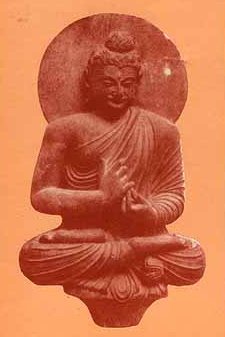


 qrhskeutika


